
Blog
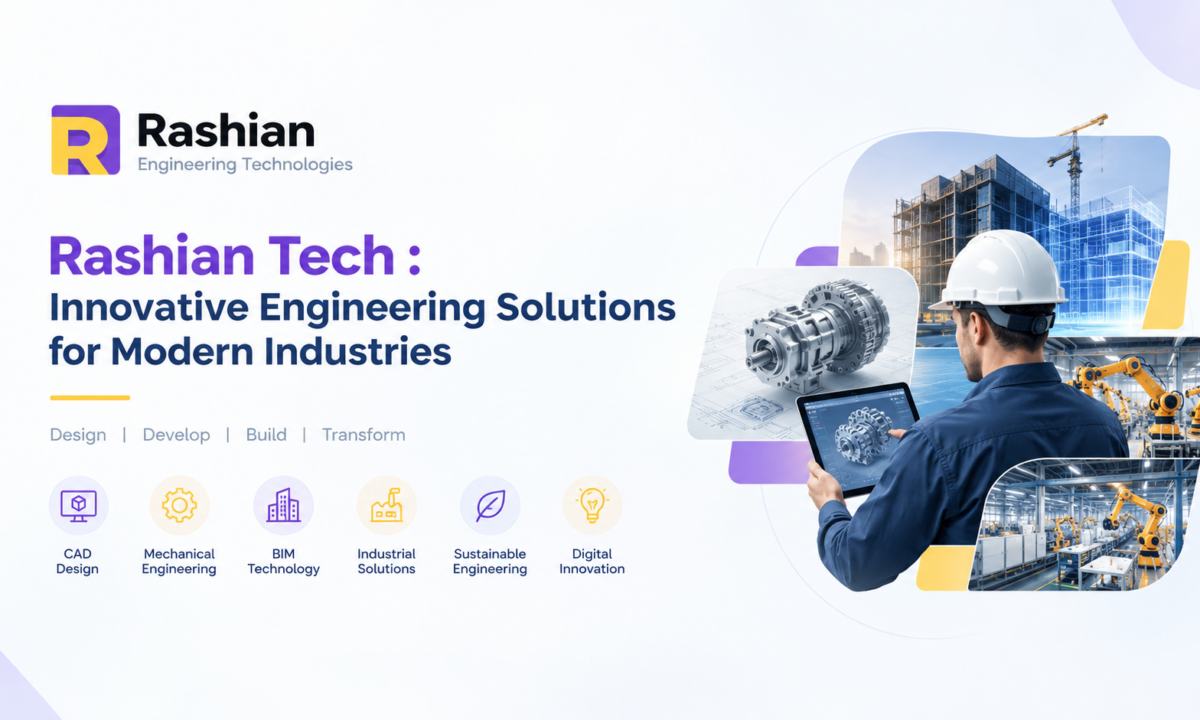
Rashian Tech: Innovative Engineering Solutions for Modern Industries
In today’s rapidly evolving industrial landscape, Innovative engineering solutions plays a vital role in improving productivity, enhancing quality, and supporting sustainable growth. Modern industries require advanced engineering solutions that combine technical expertise, innovative design, digital technologies, and efficient project management. From manufacturing and construction to infrastructure development and mechanical design, businesses are increasingly adopting advanced engineering practices to remain competitive.
Rashian Tech: Innovative Engineering Solutions for Modern Industries explores how modern engineering services and technology-driven approaches help organizations address complex challenges, optimize operations, and achieve long-term business goals.
As industries continue to embrace digital transformation, engineering companies must deliver solutions that are accurate, cost-effective, reliable, and adaptable to changing requirements. Rashian Tech represents the importance of integrating engineering knowledge with modern technological capabilities to support industrial development and innovation.
Understanding the Importance of Modern Engineering Solutions
Engineering is the foundation of industrial progress. It transforms ideas into practical applications, develops efficient systems, and creates solutions that improve the way businesses operate.
Traditional engineering methods have contributed significantly to industrial development. However, modern industries face increasing pressure to reduce costs, improve accuracy, shorten project timelines, and maintain high-quality standards. These requirements have encouraged businesses to adopt advanced design tools, digital workflows, automation, and data-driven decision-making.
Innovative engineering solutions help organizations:
- Improve design accuracy and technical precision.
- Reduce material waste and unnecessary expenses.
- Enhance manufacturing and production efficiency.
- Improve collaboration between engineering teams.
- Minimize design errors and project delays.
- Support quality assurance and operational reliability.
- Adapt to changing customer requirements and industry standards.
By combining engineering expertise with modern technology, companies can develop practical solutions that support both immediate project needs and long-term industrial growth.
Rashian Tech and the Evolution of Engineering Services
The engineering sector is undergoing a significant transformation driven by digital tools, automation, advanced design software, and intelligent manufacturing systems. Businesses increasingly need engineering partners that understand technical requirements while recognizing the importance of efficiency, scalability, and innovation.
Rashian Tech is the focus of this discussion on modern engineering solutions designed around industrial needs. Depending on project requirements and service capabilities, engineering-focused organizations can contribute through mechanical design, computer-aided design (CAD), building information modeling (BIM), technical documentation, design optimization, and other engineering support services.
The objective of innovative engineering is not simply to create a design or complete a technical drawing. It is to develop a solution that performs effectively in real-world conditions, aligns with project specifications, and supports the client’s operational goals.
A technology-driven approach allows businesses to evaluate different design options, identify potential problems early, and make informed decisions before investing in physical production or construction.
1. Computer-Aided Design (CAD) for Precision Engineering
Computer-Aided Design, commonly known as CAD, is one of the most important technologies used in modern engineering. CAD software enables engineers and designers to create detailed two-dimensional drawings and three-dimensional models of components, machinery, equipment, and mechanical systems.
Compared with traditional manual drafting, CAD improves precision, simplifies design modifications, and makes technical information easier to share.
Key benefits of CAD engineering
Improved accuracy: CAD tools help engineers develop precise dimensions, geometries, and technical drawings according to project specifications.
Faster design development: Engineers can modify existing models, reuse components, and test different design alternatives without recreating drawings from scratch.
Better visualization: Three-dimensional models allow teams to understand component shapes, assembly relationships, and potential design limitations before manufacturing begins.
Reduced errors: Digital models and drawing checks can help identify inconsistencies and dimensional problems earlier in the design process.
Enhanced collaboration: Digital files can be shared between designers, manufacturers, clients, and other project stakeholders.
CAD is widely used in mechanical engineering, product development, industrial equipment design, automotive applications, and manufacturing. By applying appropriate CAD workflows, engineering teams can improve design efficiency and produce clearer technical documentation.
2. Mechanical Design and Product Development
Mechanical design is essential for developing machinery, equipment, mechanical components, and industrial systems. It involves understanding functional requirements, selecting appropriate materials, evaluating component relationships, and creating designs that meet performance expectations.
Modern mechanical design combines engineering principles with digital modeling tools and systematic design validation.
A typical mechanical design process includes:
- Understanding project requirements and performance objectives.
- Developing preliminary concepts and design alternatives.
- Creating detailed CAD models and technical drawings.
- Evaluating dimensions, materials, tolerances, and assembly requirements.
- Reviewing designs for manufacturability and maintenance.
- Updating designs based on testing, feedback, and project specifications.
Effective mechanical design considers more than appearance. It must address functionality, durability, safety, manufacturing feasibility, and lifecycle costs.
For example, a manufacturing company developing a new machine component may need to balance strength, weight, material availability, and production cost. Engineering analysis and digital modeling can help the design team evaluate these factors before the component enters production.
Innovative mechanical design supports product development, process improvement, and the creation of efficient industrial equipment.
3. Building Information Modeling (BIM) for Construction and Infrastructure
Building Information Modeling, or BIM, is transforming how construction and infrastructure projects are planned, designed, coordinated, and managed.
BIM uses digital representations of physical and functional characteristics of buildings and infrastructure. Unlike conventional drawings alone, a BIM model can connect geometric information with other project data, depending on the model’s level of development and implementation.
BIM supports collaboration among architects, structural engineers, mechanical and electrical teams, contractors, and project managers.
The role of BIM in modern projects
Design coordination: BIM helps teams review building systems together and identify potential clashes between structural elements, pipes, ducts, and electrical services.
Visualization: Three-dimensional models make it easier for stakeholders to understand building layouts and design intent.
Project planning: BIM can support construction sequencing and schedule visualization when integrated with project scheduling data.
Cost management: Model-based quantity information can assist estimating and budgeting, subject to model accuracy and appropriate validation.
Facility management: Relevant asset information can support maintenance and operations when it is properly structured and transferred to facility teams.
Advanced BIM workflows may also incorporate time, cost, sustainability, and asset-management information. These capabilities can improve coordination and decision-making throughout a project’s lifecycle.
For organizations involved in engineering and construction, BIM offers a structured way to manage complex project information and improve communication between disciplines.
4. Digital Transformation in Manufacturing
Manufacturing industries are adopting digital technologies to improve production efficiency, reduce downtime, and maintain consistent product quality. This transformation includes the use of automation, connected equipment, digital design systems, data analytics, and intelligent production planning.
Engineering plays an important role in connecting these technologies with practical manufacturing requirements.
Digital engineering workflows can help manufacturers identify process bottlenecks, improve equipment layouts, evaluate production methods, and standardize technical documentation.
For example, a factory planning to increase production capacity may need to review its machinery arrangement, material flow, equipment accessibility, and safety requirements. Engineering models and process analysis can help evaluate possible improvements before making expensive physical changes.
Digital transformation can also support predictive maintenance when suitable equipment sensors, operational data, and analytical systems are available. Rather than relying exclusively on fixed maintenance schedules, organizations may use condition information to identify potential equipment issues.
However, successful implementation requires more than purchasing new software. Businesses must also consider workforce training, data quality, cybersecurity, system compatibility, and clearly defined operational objectives.
Rashian Tech’s engineering-focused theme highlights the broader importance of using technology to develop more efficient and adaptable industrial processes.
5. Engineering Design Optimization and Cost Efficiency
Cost efficiency is a major consideration across manufacturing, construction, and infrastructure development. Businesses must balance project budgets with performance, quality, durability, and safety.
Engineering design optimization helps achieve this balance by evaluating alternative materials, component configurations, production methods, and system layouts.
Some common optimization approaches include:
- Reducing unnecessary material usage without compromising required performance.
- Simplifying components to improve manufacturing feasibility.
- Standardizing suitable parts across product families.
- Improving assembly accessibility and maintenance requirements.
- Reviewing designs for potential fabrication or installation difficulties.
- Identifying conflicts before manufacturing or construction begins.
For example, an industrial equipment manufacturer may discover that a component requires excessive machining because of its original geometry. By reviewing the design with manufacturing specialists, the engineering team may identify a simpler geometry that meets the same functional requirements while reducing production complexity.
Any optimization must be validated against applicable engineering calculations, performance requirements, safety considerations, and quality standards.
The goal is not always to select the cheapest option. Instead, it is to achieve the best practical balance between cost, performance, reliability, and lifecycle value.
6. Quality Assurance and Technical Accuracy
Quality assurance is essential for reliable engineering outcomes. Design errors, incomplete documentation, and inconsistencies between project disciplines can lead to rework, delays, material waste, and increased expenses.
Modern engineering workflows use structured reviews and digital tools to improve the consistency of project deliverables.
Quality checks may include:
- Verification of dimensions and tolerances.
- Review of drawing standards and documentation.
- Validation of component specifications.
- Examination of model and drawing consistency.
- Coordination between different engineering disciplines.
- Review of revisions and approval records.
- Confirmation that applicable project requirements have been addressed.
Digital collaboration platforms can also help teams manage revisions and reduce the risk of working with outdated files.
Quality assurance should be integrated throughout the engineering process rather than performed only at the final stage. Early reviews make it easier to correct issues before they affect procurement, manufacturing, or construction.
A systematic approach to quality contributes to improved reliability and stronger confidence among project stakeholders.
7. Sustainable Engineering for a Better Future
Sustainability is becoming increasingly important in modern industrial development. Organizations are looking for ways to reduce waste, use resources efficiently, and minimize the environmental impact of their operations.
Sustainable engineering considers the environmental and economic consequences of decisions made during design, production, construction, and operation.
Engineering teams can contribute to sustainability by evaluating material efficiency, equipment energy consumption, product durability, maintenance requirements, and opportunities for reuse or recycling.
In manufacturing, optimized component designs may reduce material waste. In construction, coordinated digital models can help identify conflicts that could otherwise result in discarded materials and repeated work.
Energy-efficient equipment layouts, appropriate material selection, and lifecycle-oriented design can also support responsible resource management.
Sustainability goals must be evaluated using relevant data and project-specific criteria. A design that reduces material usage, for example, should still satisfy its required strength, durability, and safety performance.
By integrating sustainability into engineering decisions, businesses can work toward more resource-efficient industrial practices while maintaining technical and commercial objectives.
8. The Importance of Skilled Engineering Professionals
Advanced software and digital tools are valuable, but experienced engineering professionals remain central to successful project delivery.
Engineers interpret technical requirements, apply scientific principles, evaluate design alternatives, and determine whether proposed solutions are suitable for their intended applications.
Their expertise helps organizations identify risks, resolve complex problems, and translate customer expectations into practical engineering deliverables.
Important skills for modern engineering professionals include:
- Technical drawing and CAD proficiency.
- Mechanical design and engineering fundamentals.
- Understanding of materials and manufacturing processes.
- BIM coordination and digital modeling knowledge, where relevant.
- Analytical thinking and problem-solving.
- Technical communication and documentation.
- Teamwork and interdisciplinary collaboration.
- Familiarity with applicable standards and safety requirements.
Continuous learning is equally important. As software platforms, manufacturing methods, and industry expectations evolve, engineering teams must update their skills and adapt to new technologies.
A combination of technical knowledge, practical experience, and digital proficiency enables engineering professionals to deliver more effective solutions.
9. Applications Across Different Industries
Innovative engineering solutions support a wide range of industrial sectors. Each industry has distinct requirements, but many share the need for precision, efficiency, reliability, and coordinated project execution.
Manufacturing
Engineering design helps manufacturers develop components, machinery, production equipment, and manufacturing layouts. Digital models and technical drawings support communication between design and production teams.
Construction and Infrastructure
Engineering tools support structural coordination, building services integration, project visualization, and construction planning. BIM can improve information management across participating project teams.
Automotive and Transportation
Mechanical design and CAD support component development, assembly planning, packaging studies, and design refinement for vehicles and transportation equipment.
Industrial Equipment
Engineering services help with machine components, mechanical assemblies, equipment layouts, and technical documentation. Appropriate engineering validation remains necessary for safety-critical applications.
Energy and Utilities
Engineering design and digital modeling can support equipment planning, system layouts, maintenance accessibility, and infrastructure development.
Product Development
Engineering teams convert concepts into practical product designs by evaluating dimensions, materials, assembly methods, manufacturability, and performance requirements.
Across these industries, the right engineering approach depends on project objectives, available resources, applicable regulations, and the technical capabilities required.
10. How to Choose the Right Engineering Solutions Partner
Selecting an engineering services partner is an important decision for businesses undertaking technical projects. The right partner should understand the project scope and provide deliverables that meet defined requirements.
Before choosing an engineering company, organizations should consider several factors.
Technical expertise: Review the provider’s experience with the relevant engineering discipline, design tools, and project types.
Project requirements: Confirm that the proposed scope, deliverables, formats, and timelines are clearly defined.
Quality processes: Understand how drawings, models, calculations, and other deliverables will be reviewed and validated.
Communication: Look for a structured approach to progress updates, feedback, revisions, and issue resolution.
Technology capabilities: Determine whether the provider can work with the required software, digital formats, and collaboration systems.
Cost transparency: Request a clear quotation covering the agreed scope, revision limits, delivery milestones, and any additional charges.
Confidentiality: Confirm how technical drawings, proprietary designs, and sensitive project information will be handled.
Businesses should also review relevant project examples, professional qualifications, and references where available. These checks help establish whether a provider is suited to the project’s technical and commercial needs.
11. The Future of Engineering Innovation
The future of Innovative engineering solutions will be shaped by continued advances in artificial intelligence, automation, digital twins, simulation, robotics, and connected industrial systems.
Artificial intelligence may assist with repetitive design tasks, document analysis, preliminary concept generation, and the identification of potential inconsistencies. Engineers must still review AI-generated outputs for accuracy, feasibility, and compliance.
Digital twins can connect digital representations of physical assets with operational information, helping organizations monitor performance and evaluate possible improvements when supported by reliable data.
Advanced simulation tools can help teams study how components and systems may behave under specified conditions. This can support design refinement before physical testing, although simulation assumptions and results require appropriate validation.
Automation and robotics are also influencing manufacturing by supporting repeatable operations, productivity improvements, and more consistent production processes.
These technologies are most effective when integrated with sound engineering principles, reliable data, skilled professionals, and clear business objectives.
For Rashian Tech and the broader engineering sector, embracing innovation means continuously exploring suitable technologies while maintaining a strong focus on practical results, technical quality, and customer requirements.
Conclusion
Innovative engineering solutions are essential for modern industries seeking to improve efficiency, maintain quality, control costs, and respond to changing market demands. Technologies such as CAD, mechanical design tools, BIM, automation, and digital modeling are transforming the way engineering projects are planned, developed, and executed.
By combining technical expertise with effective digital workflows, organizations can improve design accuracy, strengthen collaboration, reduce avoidable rework, and make better-informed decisions.
Rashian Tech: Innovative Engineering Solutions for Modern Industries reflects the growing importance of engineering innovation in manufacturing, construction, infrastructure, and product development. Businesses that adopt appropriate engineering practices and invest in continuous improvement can build a stronger foundation for sustainable industrial growth.
As technology continues to evolve, successful engineering will depend on the effective combination of innovation, practical experience, quality assurance, and customer-focused problem-solving.
Looking for modern engineering solutions for your business? Explore how the right engineering approach can help support your next design, manufacturing, or infrastructure project. Contact Rashian Tech to discuss your requirements and identify suitable solutions for your project goals.