

Blog
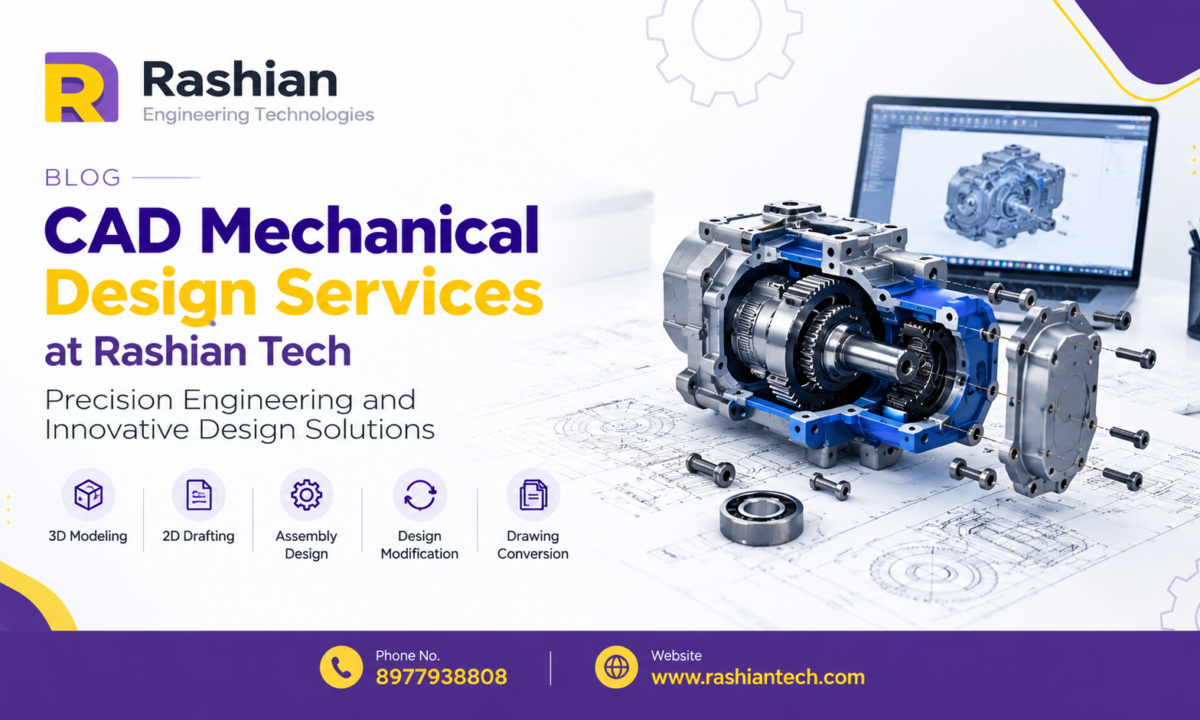
CAD Mechanical Design Services at Rashian Tech: Precision Engineering and Innovative Design Solutions
Mechanical design plays a crucial role in modern engineering, manufacturing, and industrial development. From designing individual machine components to developing complex mechanical assemblies, accurate design solutions are essential for improving product quality, reducing manufacturing costs, and ensuring operational efficiency. With the growing demand for advanced engineering solutions, Computer-Aided Design CAD Mechanical Design Services has become an indispensable technology for businesses across various industries.
Rashian Tech focuses on engineering and design solutions that support modern industrial requirements. CAD mechanical design helps transform engineering concepts into detailed digital models, technical drawings, and manufacturing-ready designs. By using advanced design software and systematic engineering practices, businesses can visualize products before production, identify potential design issues, and improve overall project efficiency.
Whether it involves machine components, mechanical assemblies, industrial equipment, or customized engineering products, CAD technology provides the accuracy and flexibility required to meet demanding project specifications.
This blog explores the importance of CAD mechanical design services, their benefits, applications, major processes, and how professional engineering design solutions can support business growth.
What Is CAD Mechanical Design?
Computer-Aided Design, commonly known as CAD, is the use of specialized software to create, modify, analyze, and optimize engineering designs. In mechanical engineering, CAD is used to develop two-dimensional (2D) technical drawings and three-dimensional (3D) models of mechanical components, machines, tools, and assemblies.
Traditional manual drafting requires considerable time and effort, particularly when working with complex components or making repeated design modifications. CAD technology simplifies this process by allowing engineers to create accurate digital representations of products and equipment.
Mechanical CAD models contain important design information, including dimensions, shapes, tolerances, material specifications, and assembly relationships. Depending on the software and project requirements, engineers can also evaluate movement, interference, and certain performance characteristics before manufacturing begins.
At Rashian Tech, CAD mechanical design can be positioned as an important engineering solution for organizations seeking detailed designs, better visualization, and efficient product development workflows.
Importance of CAD Mechanical Design in Modern Engineering
Mechanical engineering projects require accuracy, consistency, and effective coordination between design and manufacturing teams. Even a minor design error can result in material wastage, production delays, assembly difficulties, or increased costs.
CAD mechanical design helps address these challenges by providing a structured digital design environment.
1. Improved Design Accuracy
CAD software enables engineers to create models using precise dimensions and geometric constraints. This helps maintain consistency across components and assemblies while reducing common drafting errors.
Accurate technical drawings also help manufacturers understand the intended design and follow the required specifications during production.
2. Faster Product Development
Developing a product involves multiple stages, including concept development, modeling, testing, and design refinement. CAD tools allow engineers to modify existing models instead of recreating drawings from the beginning.
This flexibility can shorten design cycles and help businesses respond more quickly to changing project requirements.
3. Better Visualization
Three-dimensional modeling makes it easier to understand the shape, structure, and arrangement of mechanical components. Engineers and clients can review a digital model before physical production begins.
This improves communication between design teams, manufacturing professionals, project managers, and customers.
4. Reduced Design and Manufacturing Costs
Identifying design problems during the digital development stage can help prevent expensive modifications after manufacturing has started.
CAD also supports better material planning, component optimization, and drawing standardization, contributing to more efficient project execution.
5. Easier Design Modifications
Engineering projects frequently require revisions due to updated specifications, material changes, or customer feedback. CAD models can be adjusted efficiently, and associated drawings may be updated using the software’s supported workflows.
This makes CAD particularly valuable for customized machinery, industrial equipment, and products that undergo repeated development cycles.
Key CAD Mechanical Design Services
Professional CAD mechanical design includes a variety of services depending on the nature of the engineering project. Rashian Tech can support businesses by developing design solutions that align with their technical requirements and manufacturing objectives.
1. 2D Mechanical Drafting
2D mechanical drafting involves preparing detailed engineering drawings that communicate the dimensions, specifications, and manufacturing requirements of mechanical components.
These drawings may include front, side, and top views, sectional views, dimensioning, geometric tolerances, and other technical information required for manufacturing.
Accurate 2D drawings help production teams understand component specifications and reduce ambiguity during fabrication and assembly.
2. 3D Mechanical Modeling
3D mechanical modeling allows engineers to create digital representations of components and products. These models provide a clearer understanding of product geometry, proportions, and structural arrangements.
Engineers can use 3D models to review design concepts, make modifications, and prepare visualizations for technical discussions.
Three-dimensional modeling is particularly useful for complex mechanical components, customized equipment, industrial machinery, and product development projects.
3. Mechanical Assembly Design
Mechanical assembly design focuses on combining individual components into a complete functional arrangement. It helps engineers understand how different parts fit together and interact within a product or machine.
Assembly models can help identify potential interference between components, evaluate clearances, and simplify the assembly process.
This service is valuable for equipment manufacturers, machinery developers, and companies working with multi-component mechanical systems.
4. Engineering Drawing Conversion
Businesses may possess outdated paper drawings, scanned documents, or legacy engineering designs that need to be converted into digital formats.
CAD conversion involves recreating these drawings using CAD software while preserving the available dimensions and design information.
Digital conversion improves accessibility, simplifies revisions, and supports better documentation management. Where original dimensions or specifications are unclear, they should be verified before manufacturing.
5. Design Modification and Optimization
Existing mechanical designs may require changes to improve manufacturability, reduce complexity, accommodate new components, or meet updated project requirements.
CAD design modification allows engineers to update component geometry, dimensions, and assembly arrangements while maintaining appropriate design documentation.
Design optimization should consider the intended function, material properties, manufacturing methods, safety requirements, and applicable engineering standards.
Applications of CAD Mechanical Design Across Industries
CAD mechanical design supports a wide range of industries by improving product development, technical documentation, and manufacturing preparation.

1. Manufacturing and Production
CAD drawings and 3D models help manufacturers design machine components, production equipment, fixtures, and tooling. Accurate digital documentation supports repeatable production and better coordination between design and fabrication teams.

2. Automotive Engineering
Automotive applications include mechanical brackets, housings, mounting systems, engine-related components, and vehicle assemblies. CAD helps engineers develop component geometry and review assembly arrangements before prototype production.

3. Industrial Machinery
Machinery manufacturers use CAD to develop equipment layouts, machine frames, gear arrangements, conveyor components, and customized mechanical systems. Detailed models help teams understand component relationships and plan assembly activities.

4. Aerospace and Precision Engineering
Precision engineering projects require carefully controlled dimensions, tolerances, and material specifications. CAD supports the creation of detailed component models and technical documentation, subject to the relevant industry standards and verification processes.

5. Product Development
CAD is widely used to develop consumer products, mechanical housings, mounting accessories, tools, and customized equipment. Digital prototypes help stakeholders review the appearance and structure of a product before committing to physical manufacturing.
The CAD Mechanical Design Process
A systematic workflow helps ensure that mechanical design projects progress efficiently from the initial concept to the final technical documentation.
Step 1: Understanding Project Requirements
The process begins with understanding the client’s requirements, product functionality, operating conditions, dimensions, materials, and manufacturing objectives.
Engineers review the available sketches, reference drawings, specifications, and other relevant documents to establish the project scope.
Step 2: Concept Development
Based on the requirements, the design team develops an appropriate mechanical concept. This stage considers the component arrangement, intended functionality, space constraints, and manufacturing approach.
Early discussions help clarify expectations before detailed modeling begins.
Step 3: 2D Drafting and 3D Modeling
The approved concept is developed into detailed 2D drawings or 3D CAD models. Dimensions, geometric features, component interfaces, and other necessary design information are incorporated into the digital design.
The choice between 2D drafting and 3D modeling depends on the project’s complexity and deliverable requirements.
Step 4: Design Review and Validation
The design is reviewed for dimensional consistency, assembly compatibility, and alignment with the available project specifications.
Where necessary, engineers may use suitable simulation, motion analysis, interference checks, or engineering calculations. Such evaluations should be selected according to the application and do not automatically replace physical testing or professional engineering verification.
Step 5: Design Revisions
Feedback from clients, manufacturing teams, and other stakeholders is incorporated into the design where appropriate.
Revision management helps ensure that updated drawings and models remain consistent with the approved design requirements.
Step 6: Final Documentation and Delivery
The final deliverables may include 2D drawings, 3D models, assembly drawings, component details, and other agreed technical documents.
Files can be prepared in suitable formats depending on the client’s software, manufacturing workflow, and project requirements.
Benefits of Choosing Professional CAD Mechanical Design Services
Working with a professional CAD design service provider can help organizations manage engineering projects more effectively.
Greater productivity: Structured CAD workflows help design teams develop and revise engineering models efficiently.
Improved collaboration: Digital drawings and models provide a common reference for designers, manufacturers, project managers, and clients.
Better documentation: Organized technical files support design reviews, revision tracking, and future product modifications.
Manufacturing readiness: Well-prepared drawings communicate the dimensions and specifications needed by manufacturing teams, subject to appropriate engineering review.
Support for customization: CAD allows businesses to develop designs tailored to specific applications, equipment configurations, and customer requirements.
Scalable design workflows: Digital models can be reused as starting points for related products, reducing repetitive drafting work when appropriate.
The actual benefits depend on project complexity, software capabilities, input quality, engineering review, and the quality of the design process.
Why Consider Rashian Tech for CAD Mechanical Design?
Selecting a suitable CAD mechanical design partner is an important decision for businesses that depend on accurate engineering documentation and efficient product development.
Rashian Tech can present its CAD mechanical design services around the needs of manufacturing companies, engineering teams, equipment developers, and organizations seeking digital design support.
A professional service approach should emphasize clear communication, attention to dimensional details, organized project documentation, and an understanding of manufacturing requirements.
Clients should also evaluate the provider’s relevant project experience, software capabilities, delivery timelines, revision policy, and ability to supply the required file formats.
By aligning the design process with the client’s technical objectives, CAD services can help create a smoother connection between product concepts and manufacturing activities.
For companies planning new mechanical components, improving existing designs, or digitizing technical drawings, the right engineering design workflow can provide a valuable foundation for future development.
Future Trends in CAD Mechanical Design
CAD technology continues to evolve alongside advances in automation, digital manufacturing, and engineering software.
Cloud-Based Collaboration
Cloud-enabled engineering platforms can help teams access shared design information and collaborate across different locations. Depending on the platform, they may also support revision management and centralized project documentation.
Simulation-Driven Design
Simulation tools can help engineers investigate selected design conditions, such as mechanical movement, stress distribution, or thermal behavior. These capabilities support design decisions when models, material properties, boundary conditions, and assumptions are appropriate.
Automation and Parametric Modeling
Parametric CAD systems allow designs to be controlled through dimensions, constraints, and relationships. Automation can reduce repetitive work and support the generation of related component variations.
Integration with Digital Manufacturing
CAD models increasingly connect with computer-aided manufacturing (CAM), CNC machining, additive manufacturing, and other production technologies.
This integration can improve information transfer from design to manufacturing, although files and toolpaths still require suitable preparation and verification.
As these technologies develop, engineering service providers such as Rashian Tech can explore workflows that help businesses improve design coordination and respond to changing industrial requirements.
Conclusion
CAD mechanical design has become an essential part of modern engineering because it supports accurate modeling, detailed technical documentation, design modification, and manufacturing preparation. From individual mechanical components to complex industrial assemblies, CAD helps businesses visualize their ideas and coordinate product development more effectively.
Professional services such as 2D drafting, 3D modeling, assembly design, drawing conversion, and design modification can support organizations across manufacturing, automotive engineering, industrial machinery, and product development.
Rashian Tech’s CAD mechanical design services can be positioned as a solution for businesses seeking precision engineering and practical digital design support. By focusing on project requirements, clear documentation, suitable design tools, and systematic reviews, businesses can establish a stronger foundation for product development and manufacturing.
As industries continue to adopt digital engineering technologies, CAD mechanical design will remain an important tool for improving workflows, supporting innovation, and translating engineering concepts into detailed designs ready for further evaluation and production.