
Blog
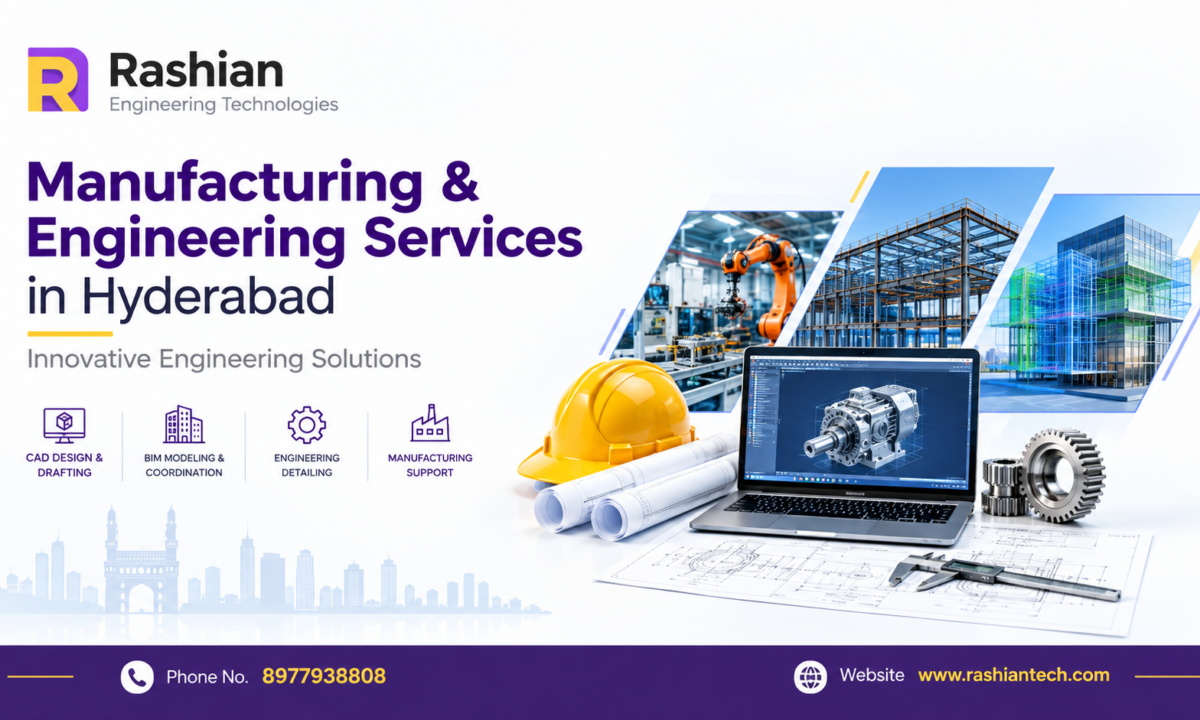
Manufacturing and Engineering Services play an important role in the growth of modern industries. From product development and machine design to fabrication and construction, engineering solutions help businesses improve productivity, maintain quality, and reduce operational costs. As industries continue to adopt advanced technologies, the demand for reliable manufacturing and engineering services is increasing across Hyderabad and other industrial regions.
Rashian Techsupports engineering and industrial projects with innovative design solutions, technical expertise, and a focus on quality. Manufacturing companies, construction businesses, and industrial organizations require accurate engineering designs and well-planned project execution to achieve their goals. Therefore, choosing the right engineering partner can make a significant difference in project performance.
In this blog, we will explore manufacturing and engineering services, their benefits, modern technologies, industrial applications, and how engineering solutions can support business growth.
What Are Manufacturing and Engineering Services?
Manufacturing and engineering services involve designing, developing, planning, and improving products, components, equipment, and industrial systems. These services combine engineering knowledge with practical manufacturing processes to transform ideas into functional products and systems.
Engineering professionals work on technical drawings, 3D models, product development, structural designs, and production planning. Meanwhile, manufacturing processes convert approved designs into finished products through machining, fabrication, assembly, and quality inspection.
Together, manufacturing and engineering help industries achieve better accuracy, efficiency, and consistency.
Businesses may require different services depending on their project requirements. For example, a manufacturing company may need mechanical design and fabrication drawings, while a construction company may require structural detailing, Building Information Modeling (BIM), or coordinated engineering designs.
Rashian Tech focuses on engineering solutions that help businesses plan their projects, improve design accuracy, and support efficient execution.
Importance of Manufacturing and Engineering in Modern Industries
Manufacturing and engineering are essential for industrial development because they connect technical planning with actual production. Well-designed engineering systems help organizations improve the way products are developed, manufactured, and delivered.
1. Improved Product Quality
Accurate engineering designs help manufacturers produce components according to defined specifications. Detailed drawings, proper material selection, and quality checks reduce the possibility of manufacturing errors.
As a result, businesses can maintain consistent product quality and meet customer expectations.
2. Increased Production Efficiency
Efficient engineering planning helps manufacturers identify suitable production methods, optimize workflows, and reduce unnecessary activities. Furthermore, automation and advanced manufacturing technologies can improve production speed.
These improvements help businesses manage resources effectively and meet delivery schedules.
3. Reduced Manufacturing Costs
Poor planning can lead to material wastage, design changes, and production delays. However, detailed engineering analysis helps identify potential problems before manufacturing begins.
By improving design accuracy and material utilization, companies can reduce avoidable expenses and manage project budgets more effectively.
4. Better Workplace Safety
Engineering teams consider equipment requirements, operating conditions, and safety standards when planning industrial systems. Proper layouts, reliable equipment designs, and suitable safety measures help reduce workplace risks.
Consequently, businesses can create safer and more organized working environments.
5. Support for Business Growth
Modern engineering solutions allow companies to develop new products, improve existing systems, and respond to changing market requirements. With scalable processes and accurate technical documentation, businesses can expand their operations more confidently.
Key Manufacturing and Engineering Services
Manufacturing and engineering projects require different technical services based on the type of industry, product, and project scope. The following services are important for achieving reliable results.
1. Mechanical Engineering Design
Mechanical engineering design involves developing machines, mechanical components, equipment, and industrial systems. Engineers consider performance, dimensions, materials, loads, and operating conditions while creating designs.
The process may include 2D drafting, 3D modeling, assembly design, and technical documentation.
Accurate mechanical designs help manufacturers understand how components fit together and how equipment should function. In addition, detailed models can support design reviews before physical production begins.
Rashian Tech can support businesses that require organized engineering design and detailing solutions according to their project needs.
2. CAD Design and Drafting
Computer-Aided Design (CAD) is widely used in manufacturing, construction, and engineering industries. CAD software enables professionals to create accurate technical drawings and digital models.
CAD design and drafting services may include:
2D engineering drawings
3D component modeling
Assembly drawings
Manufacturing drawings
Technical documentation
Design modifications and revisions
These drawings communicate important technical information to engineers, manufacturers, fabricators, and project teams.
Moreover, digital drawings make it easier to update designs when project requirements change. Accurate CAD documentation also helps reduce misunderstandings during production and installation.
3. Engineering Design and Detailing
Engineering design and detailing convert engineering concepts into technical information that teams can use during fabrication, construction, and assembly.
This service may involve preparing detailed drawings, defining dimensions, identifying materials, and documenting connection details.
For example, structural steel projects require clear fabrication and erection drawings. These documents help workshops manufacture components and enable site teams to assemble structures according to approved designs.
Proper detailing improves coordination between design teams, fabricators, contractors, and project managers. Therefore, it is an important part of successful engineering project execution.
4. Structural Engineering Solutions
Structural engineering focuses on the design and analysis of structures such as industrial buildings, warehouses, commercial facilities, and steel frameworks.
Engineers evaluate loads, structural stability, material strength, and relevant design requirements before finalizing a structural system.
Structural engineering services may include structural modeling, design calculations, steel detailing, and technical drawings, depending on the project scope.
Accurate structural planning helps improve construction coordination and supports safe, efficient project execution. All structural designs should be reviewed and approved by qualified professionals in accordance with applicable standards and regulations.
5. Building Information Modeling (BIM)
Building Information Modeling is a digital approach to planning, designing, coordinating, and managing building and infrastructure projects. BIM combines three-dimensional models with structured project information.
It helps architects, structural engineers, and MEP professionals coordinate their designs within a shared digital environment.
Key BIM services may include:
3D BIM modeling
Structural BIM modeling
MEP BIM modeling
Clash detection and coordination
Construction documentation
Model updates and project visualization
For example, clash detection can identify potential conflicts between HVAC ducts, electrical services, and structural elements before installation begins.
As a result, BIM can help reduce rework, improve communication, and support better project planning.
6. Manufacturing Drawings and Fabrication Support
Manufacturing drawings provide the technical details required to produce components and assemblies. These drawings typically include dimensions, tolerances, material specifications, and other manufacturing instructions.
Fabrication support helps production teams understand the approved design and prepare components accurately.
Clear documentation is especially important for projects involving complex assemblies, customized equipment, and structural steel fabrication.
Furthermore, coordinated fabrication drawings can help improve workshop productivity and reduce errors caused by incomplete technical information.
How Modern Technology Is Transforming Manufacturing
Technology is changing how manufacturing companies design products, manage production, and maintain quality. Digital engineering tools allow businesses to improve planning while making their operations more flexible.
1. Automation and Robotics
Automation systems perform repetitive tasks with greater consistency. Industrial robots are used in welding, material handling, assembly, packaging, and other production activities.
When implemented correctly, automation can improve productivity and reduce workers’ exposure to certain hazardous tasks.
2. 3D Modeling and Simulation
Three-dimensional modeling helps engineers visualize products before manufacturing. Simulation tools can evaluate design behavior under selected operating conditions.
For example, engineers may analyze stress, movement, thermal performance, or fluid behavior to identify potential design problems.
These tools support informed decision-making and reduce the need for repeated physical prototypes in suitable applications.
3. Artificial Intelligence
Artificial intelligence is increasingly being applied to manufacturing data analysis, quality inspection, production planning, and predictive maintenance.
AI-supported systems can identify unusual equipment behavior and help maintenance teams investigate potential failures. However, their effectiveness depends on reliable data, suitable implementation, and human oversight.
4. Digital Twins
A digital twin is a digital representation of a physical product, machine, or system that can be connected to operational data.
Depending on the application, digital twins can help teams monitor performance, understand system behavior, and evaluate improvement opportunities.
5. Cloud-Based Engineering Collaboration
Cloud-based tools allow project teams to share drawings, models, revisions, and technical documents. This approach can improve coordination between design offices, manufacturing facilities, and construction sites.
With clear revision control and access management, teams can work with consistent project information and reduce communication gaps.
Industries That Benefit from Manufacturing and Engineering Services
Manufacturing and engineering solutions are used across many sectors. Each industry has different technical requirements, production methods, and quality expectations.
Automotive Industry
Automotive manufacturers depend on accurate component designs, assembly planning, tooling, and quality inspection. Engineering services help develop vehicle components and improve manufacturing processes.
Construction and Infrastructure
Construction projects require structural design, CAD drafting, steel detailing, and BIM coordination. These services support better planning and communication throughout the project lifecycle.
Industrial Equipment Manufacturing
Industrial equipment manufacturers need reliable mechanical designs, assembly drawings, and technical documentation. Engineering support helps ensure that components meet performance and manufacturing requirements.
Energy and Power
The energy sector uses engineering services for equipment design, plant layouts, structural systems, and project coordination. Solar, conventional power, and industrial energy projects may require different engineering disciplines.
Aerospace and Heavy Engineering
Aerospace and heavy engineering projects demand strict attention to specifications, material properties, tolerances, and quality assurance. Detailed engineering documentation supports traceability and manufacturing consistency.
Warehousing and Industrial Buildings
Industrial facilities often require structural steel design, fabrication drawings, and coordinated building services. Engineering solutions help project teams plan these facilities according to operational needs.
Benefits of Choosing the Right Engineering Partner
Selecting a suitable engineering partner is an important decision for any manufacturing or industrial business. The right partner should understand project requirements, communicate clearly, and provide technically appropriate deliverables.
Here are some key benefits.
Better technical accuracy:Experienced engineering professionals can prepare detailed drawings and models that communicate design requirements clearly.
Improved project coordination:Well-organized documentation helps different teams work together and understand their responsibilities.
Time savings:Early design reviews and coordinated engineering workflows can identify problems before they affect manufacturing or construction.
Flexible project support:Businesses may need support for individual drawings, specific design tasks, or larger engineering packages. A suitable service provider should clarify its capabilities and project scope.
Consistent documentation:Standardized drawings, revision tracking, and organized technical records help teams maintain project information throughout production and installation.
Before choosing a provider, businesses should review relevant experience, software capabilities, quality procedures, delivery schedules, and communication practices.
Why Consider Rashian Tech for Manufacturing and Engineering Solutions?
Rashian Tech focuses on engineering-related services that support technical planning, design development, and project coordination. Businesses looking for engineering assistance should consider a service provider that understands their requirements and can deliver clear, practical documentation.
Rashian Tech can be considered for projects involving engineering design, CAD drafting, detailing, and BIM-related workflows, subject to the company’s confirmed service capabilities.
A Focus on Engineering Accuracy
Accurate technical information is essential for manufacturing and construction. Engineering drawings and models should communicate dimensions, design intent, and relevant specifications clearly.
Digital Design Support
CAD and BIM tools help teams visualize designs, review components, and coordinate technical information. Digital workflows can also simplify design revisions and project communication.
Project-Oriented Approach
Every engineering project has its own requirements, budget, and schedule. A structured approach to understanding project objectives helps define deliverables and responsibilities before work begins.
Coordination and Documentation
Engineering projects often involve multiple stakeholders. Clear documentation and timely communication can help reduce confusion and support efficient execution.
Solutions Based on Project Requirements
Manufacturing and engineering requirements vary by industry. Businesses should discuss their project scope with Rashian Tech to confirm the appropriate services, deliverables, timelines, and technical standards.
To learn more about its services, visit the official website: https://rashiantech.com.
Challenges in Manufacturing and Engineering
Although modern engineering tools offer many advantages, manufacturing businesses still face several challenges.
Changing Project Requirements
Frequent design changes can affect production schedules, budgets, and documentation. A clear revision management process helps teams understand which drawings and models are current.
Skilled Workforce Requirements
Advanced manufacturing technologies require trained engineers, technicians, and operators. Continuous learning helps employees work effectively with new tools and processes.
Quality Control
Manufacturers must maintain consistent quality across components and production batches. Inspection procedures, suitable measurement tools, and documented quality checks help identify defects.
Cost and Delivery Pressure
Companies often need to balance project cost, product quality, and delivery schedules. Early planning and efficient resource allocation can help manage these competing requirements.
Technology Integration
Introducing new software and automated equipment can require investment, training, and changes to existing workflows. Businesses should evaluate their operational needs before adopting new technologies.
By addressing these challenges through careful planning, suitable technology, and consistent quality procedures, businesses can improve their engineering and manufacturing performance.
Future Trends in Manufacturing and Engineering
The future of manufacturing and engineering will be shaped by digitalization, automation, sustainability, and data-driven decision-making.
Smart manufacturing:Connected equipment and production monitoring systems can provide information about performance, output, and equipment conditions.
Sustainable production:Businesses are increasingly exploring energy-efficient equipment, waste reduction, material optimization, and recyclable materials.
Advanced robotics:Robotics and automation are expanding across industries, supporting repetitive and precision-based manufacturing tasks.
Integrated digital engineering:CAD, BIM, simulation, and product lifecycle management systems can improve collaboration and help maintain consistent technical information.
Additive manufacturing:3D printing enables selected components to be produced directly from digital models. It is useful for prototyping and certain specialized production applications.
Data-driven maintenance:Equipment monitoring and predictive analytics can help maintenance teams identify potential issues and plan interventions more effectively.
As these technologies develop, engineering companies and manufacturers will need to invest in suitable tools, skilled professionals, and effective workflows to remain competitive.
How to Select Manufacturing and Engineering Services for Your Project
Before selecting an engineering service provider, businesses should evaluate their technical requirements and expected outcomes.
Define the project scope:Identify the components, drawings, models, or engineering activities required.
Check relevant experience:Review previous projects and industry-specific capabilities.
Confirm software and deliverables:Discuss the required file formats, drawing standards, models, and documentation.
Review quality procedures:Understand how designs are checked, revisions are managed, and errors are addressed.
Discuss timelines and budgets:Agree on milestones, responsibilities, costs, and delivery expectations.
Maintain communication:Establish a clear process for sharing feedback and approving design changes.
Confirm applicable standards:Ensure that qualified professionals review the work according to the relevant industry and regulatory requirements.
These steps help businesses make informed decisions and establish a clear working relationship with their engineering partner.
Conclusion
Manufacturing and engineering services are essential for developing reliable products, improving industrial processes, and supporting successful construction and infrastructure projects. From CAD design and mechanical engineering to structural detailing, BIM modeling, and fabrication documentation, these services help businesses transform technical concepts into practical solutions.
Modern technologies such as automation, artificial intelligence, 3D modeling, and digital collaboration are creating new opportunities to improve productivity and project coordination. However, successful results still depend on accurate engineering, skilled professionals, effective quality control, and clear communication.
Rashian Techaims to support engineering and industrial project requirements through design-focused and technology-enabled solutions. Businesses can explore its website to learn more about its services and discuss their specific project needs.
If your organization is planning a manufacturing, engineering, or construction project, choosing the right technical partner can help establish a strong foundation for quality, efficiency, and long-term growth.