
Blog
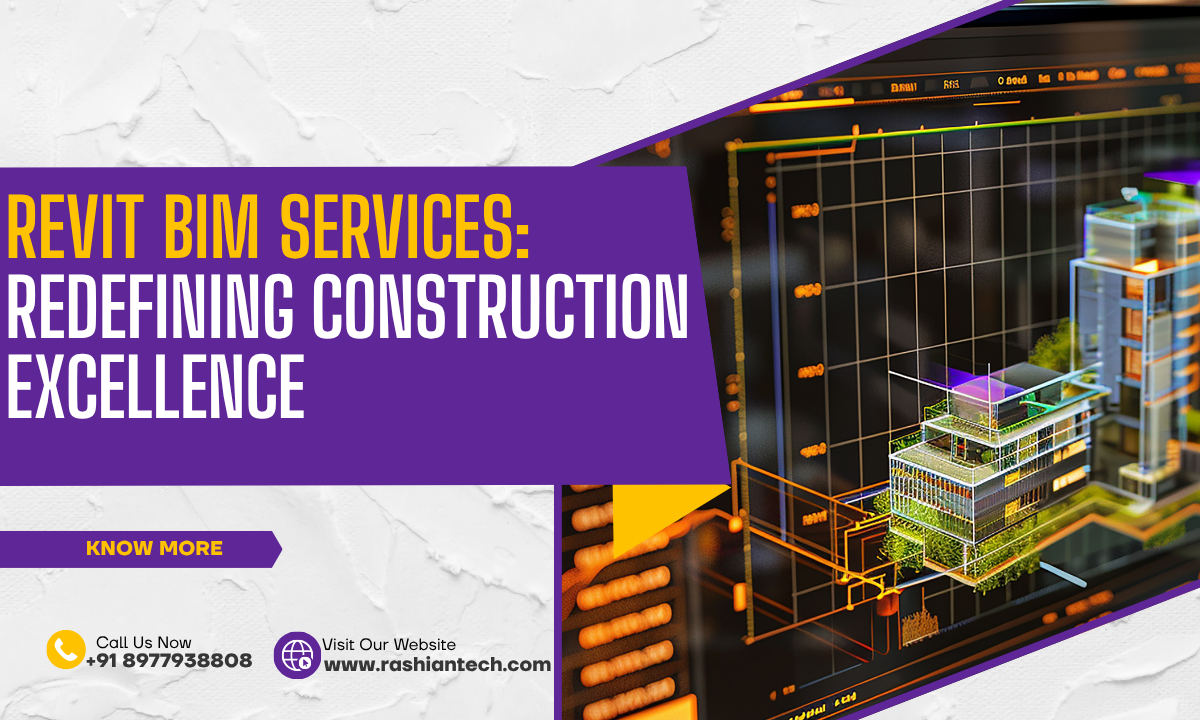
Revit BIM Services: Redefining Construction Excellence
The construction industry has evolved far beyond traditional design practices, with digital technologies becoming the foundation of successful project execution. From minimizing design conflicts to improving collaboration between stakeholders, modern engineering now depends on intelligent workflows that deliver greater precision, efficiency, and long-term value. At the center of this transformation is Revit BIM Services, enabling architects, engineers, contractors, and project owners to visualize, coordinate, and optimize every stage of a project before construction even begins.
At Rashian Engineering Technologies, we believe that exceptional structures begin with accurate planning and data-driven engineering. By integrating advanced Building Information Modeling (BIM) methodologies into every project, our team creates reliable digital models that improve coordination, reduce costly revisions, and streamline project delivery. Whether developing industrial facilities, commercial buildings, manufacturing plants, or infrastructure projects, our engineering expertise helps clients make informed decisions while maintaining quality, safety, and efficiency throughout the project lifecycle.
Unlike conventional drafting methods, BIM creates a comprehensive digital environment where every structural, architectural, and MEP component works together as a connected system. This intelligent approach allows project teams to identify challenges early, improve communication, and deliver buildings that meet today’s performance expectations while remaining adaptable for future requirements.
What Makes Modern Building Design More Demanding?
Today’s buildings are expected to accomplish far more than providing functional space. Industrial facilities must support evolving production requirements, commercial developments need greater flexibility, and infrastructure projects demand higher standards of durability, sustainability, and operational efficiency. These increasing expectations require engineering teams to manage complex information while maintaining exceptional accuracy across every discipline.
Traditional two-dimensional drawings often create communication gaps between architects, structural engineers, mechanical consultants, and contractors. Even minor inconsistencies can result in expensive construction delays, unnecessary material waste, and repeated design revisions. As project complexity continues to increase, relying solely on conventional documentation is no longer sufficient.
Digital engineering environments enable every project participant to access updated design information from a centralized model, significantly reducing misunderstandings during planning and execution. This collaborative workflow creates greater confidence in design decisions while supporting smoother coordination throughout every construction phase.
Revit BIM Services for Intelligent Design Coordination
Successful projects depend on seamless collaboration between multiple engineering disciplines. Architectural layouts, structural systems, mechanical services, electrical networks, and plumbing installations must function together without conflicts. Managing these relationships manually often becomes difficult as project size and complexity increase.
A model-based workflow creates an integrated digital platform where every stakeholder contributes to a shared source of project information. Design updates become immediately visible across related disciplines, allowing teams to evaluate their impact before construction begins. This coordinated process reduces inconsistencies while improving communication among consultants, engineers, contractors, and clients.
Early coordination also supports faster decision-making because project teams can visualize complete building systems rather than interpreting isolated drawings. As a result, construction activities become more organized, reducing delays and minimizing costly design modifications during execution.
Improving Design Accuracy Through Digital Modeling
Accuracy forms the foundation of every successful engineering project. Small design inconsistencies can create significant structural challenges once construction begins, affecting schedules, budgets, and overall project quality. Intelligent digital modeling addresses these risks by providing highly detailed representations of building components long before physical work starts.
Instead of relying on disconnected documents, engineering teams work within an interconnected environment where every modification updates related views, schedules, sections, and elevations automatically. This consistency helps eliminate manual errors while ensuring that project documentation remains synchronized throughout the design process.
Engineers can evaluate dimensions, material quantities, spatial relationships, and constructability with greater confidence. The ability to visualize complex assemblies also enables clients to understand project requirements more clearly, leading to better-informed approvals and smoother execution.
Better Collaboration Across Every Engineering Discipline
Construction projects bring together professionals from multiple technical backgrounds, each responsible for different aspects of the building. Without effective collaboration, design conflicts often remain unnoticed until construction begins, creating avoidable delays and additional costs.
Shared digital environments encourage continuous communication among architects, structural engineers, MEP consultants, fabrication teams, and project managers. Every participant works using coordinated project information, allowing potential issues to be identified and resolved before they affect site activities.
This collaborative workflow not only improves technical accuracy but also enhances transparency throughout the project lifecycle. Stakeholders gain greater visibility into design progress, making project management more efficient while strengthening confidence in engineering decisions.
Why Visualization Improves Project Decision-Making
One of the greatest advantages of modern engineering is the ability to transform technical information into highly realistic digital representations. Instead of interpreting multiple drawings, project owners and consultants can explore three-dimensional building models that accurately illustrate layouts, structural systems, service routes, and construction sequences.
This visual clarity supports faster approvals because stakeholders can understand project intent without relying solely on technical documentation. Design alternatives become easier to compare, enabling informed decisions based on performance, constructability, and long-term operational requirements.
Improved visualization also reduces uncertainty during planning. Potential design conflicts, accessibility concerns, maintenance requirements, and spatial limitations become visible before construction begins, helping teams avoid expensive modifications later in the project.
Supporting Sustainable and Efficient Construction
Sustainability has become an essential objective for modern construction, requiring engineers to optimize resources while minimizing environmental impact. Digital engineering plays an important role in achieving these goals by enabling more accurate planning and reducing unnecessary material consumption.
Precise quantity calculations improve procurement planning, helping organizations minimize waste while maintaining better cost control. Coordinated design information also reduces rework, preventing additional resource consumption caused by construction errors.
Optimized planning contributes to improved energy performance, efficient building layouts, and smarter utilization of available space. These advantages support organizations seeking environmentally responsible infrastructure while maintaining operational efficiency and long-term economic value.
Revit BIM Services for Clash Detection and Risk Reduction
Construction delays often originate from design conflicts that remain unnoticed until work begins on-site. Structural members may interfere with mechanical systems, electrical pathways may overlap with plumbing networks, or equipment layouts may require unexpected modifications. These issues increase costs, disrupt schedules, and reduce overall project efficiency.
Through intelligent coordination, Revit BIM Services allow engineering teams to identify and resolve clashes during the design stage rather than during construction. Detecting these conflicts early enables informed decision-making, improves interdisciplinary coordination, and significantly reduces the likelihood of costly rework.
Early risk identification also strengthens project planning by ensuring that every component fits within the intended design environment. This proactive approach creates smoother workflows, improves construction quality, and helps projects remain on schedule.
Enhancing Cost Control and Resource Planning
Every successful project depends on effective financial planning. Accurate quantity estimation and efficient resource allocation directly influence construction budgets and project profitability. Traditional estimation methods often rely on manual calculations, increasing the possibility of inconsistencies.
By utilizing intelligent digital models, engineering teams gain access to reliable project information that supports precise quantity take-offs and better procurement strategies. Revit BIM Services simplify cost planning by providing updated project data whenever design modifications occur, allowing teams to make confident financial decisions throughout the project lifecycle.
Improved planning also minimizes unnecessary material purchases, reduces waste generation, and supports more predictable construction schedules, creating greater value for project owners.
Revit BIM Services for Better Project Lifecycle Management
Modern buildings continue to generate value long after construction is complete. Facility managers, maintenance teams, and asset owners require accurate building information to support inspections, renovations, equipment replacement, and future expansions.
A well-developed digital model serves as a valuable information resource throughout the operational life of a facility. Rather than searching through multiple drawing sets, stakeholders can access organized project data whenever maintenance or upgrades become necessary.
This long-term accessibility improves operational efficiency while extending the usefulness of engineering documentation beyond the construction phase, making digital modeling an investment that continues delivering value for years.
Driving Innovation Across Industrial and Commercial Projects
Every industry presents unique engineering challenges. Manufacturing facilities require efficient production layouts, logistics centers demand optimized operational flow, commercial buildings prioritize occupant experience, and infrastructure developments require long-term durability under demanding conditions.
Revit BIM Services provide the flexibility needed to support these diverse project requirements by enabling accurate planning, intelligent coordination, and data-driven engineering decisions. Engineers can evaluate multiple design alternatives, optimize building performance, and improve constructability before physical work begins.
This adaptability enables organizations to respond confidently to changing project requirements while maintaining engineering excellence throughout development.
Why Businesses Choose Rashian Engineering Technologies
Selecting the right engineering partner influences every stage of a construction project. Beyond technical capability, organizations seek a team that understands project objectives, embraces innovation, and consistently delivers dependable engineering solutions.
At Rashian Engineering Technologies, every project is approached with a commitment to precision, collaboration, and continuous improvement. Our multidisciplinary expertise enables us to deliver Revit BIM Services that support accurate planning, seamless coordination, and efficient execution across industrial, commercial, and infrastructure developments.
By combining technical knowledge with advanced engineering technologies, we help clients reduce project risks, improve design quality, and achieve better construction outcomes without compromising safety or operational performance.
The Future of Digital Building Design
As construction technologies continue evolving, digital engineering will play an even greater role in shaping the built environment. Artificial intelligence, automation, cloud collaboration, digital twins, and smart asset management are redefining how projects are designed, constructed, and maintained.
Organizations that embrace these innovations gain stronger competitive advantages through improved efficiency, better collaboration, and higher-quality project delivery. Revit BIM Services represent a critical step toward this digital transformation by creating connected engineering environments where data supports smarter decisions from concept through completion.
Future-ready construction demands greater transparency, flexibility, and precision, making digital modeling an essential component of sustainable engineering practices.
Conclusion
Modern construction requires more than technical expertise—it demands intelligent collaboration, accurate planning, and data-driven decision-making that supports successful project delivery from beginning to end. As buildings become increasingly complex, organizations must adopt advanced engineering methodologies that improve coordination while reducing project risks.
Revit BIM Services empower engineering teams to deliver accurate designs, streamline communication, enhance visualization, optimize resources, and improve overall construction efficiency. From early planning to facility management, this integrated approach creates measurable value throughout every phase of the project lifecycle.
With extensive engineering experience and a commitment to innovation, Rashian Engineering Technologies delivers Revit BIM Services that help businesses build smarter, reduce uncertainty, and achieve reliable project outcomes with confidence. By embracing intelligent digital engineering today, organizations are better prepared to create resilient, efficient, and future-ready infrastructure for tomorrow.