
Blog
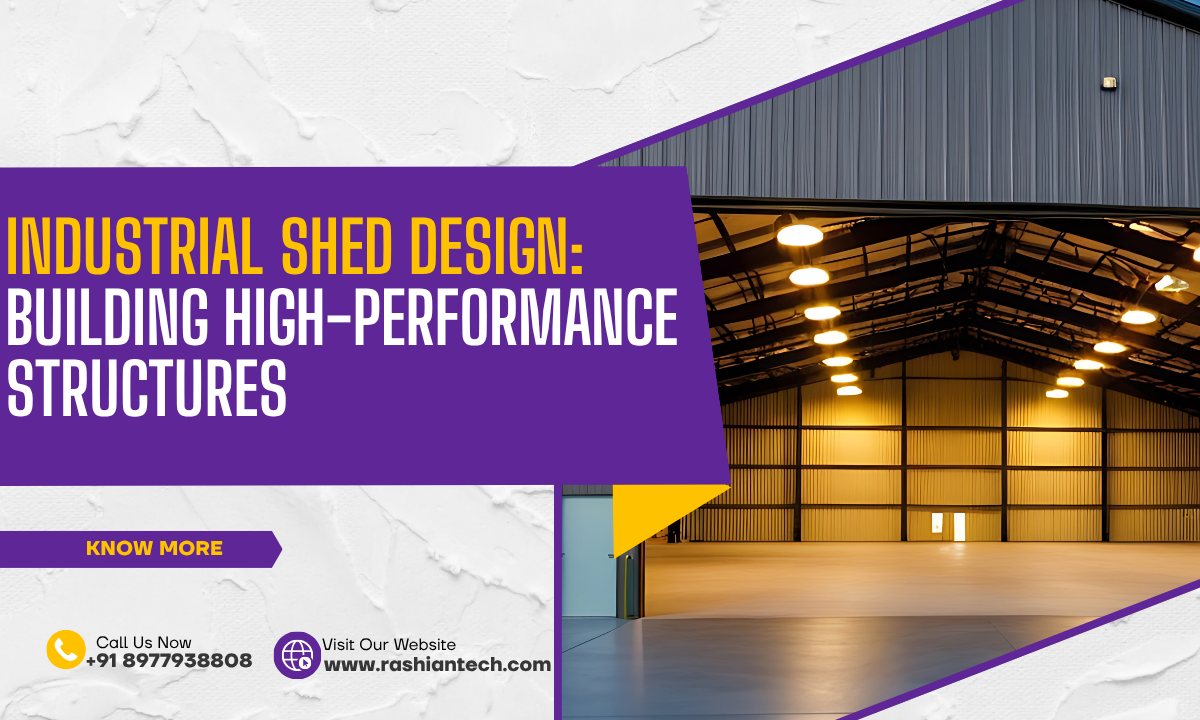
Industrial Shed Design: Building High-Performance Structures
Industrial infrastructure has become a critical factor in determining operational efficiency, business scalability, and long-term productivity. Modern industries require facilities that are not only structurally robust but also flexible enough to support changing production requirements, advanced machinery, and future expansion. A well-executedIndustrial Shed Design provides the foundation for creating safe, efficient, and sustainable industrial environments that maximize performance while minimizing operational challenges.
At Rashian Engineering Technologies, we deliver engineering solutions that combine innovation, precision, and technical excellence to develop industrial facilities tailored to evolving business needs. Our multidisciplinary expertise enables us to transform industrial concepts into durable, high-performing structures through intelligent planning, advanced engineering methodologies, and efficient project execution. Whether supporting manufacturing units, logistics hubs, warehouses, fabrication facilities, or heavy industrial plants, we design infrastructure that strengthens operational capabilities while ensuring long-term reliability.
Today’s industrial sheds are engineered to perform far beyond their traditional role as enclosed workspaces. They are designed to optimize production flow, improve equipment integration, support operational safety, and accommodate future technological advancements. Strategic engineering during the planning stage allows businesses to create infrastructure that remains efficient, adaptable, and competitive for decades.
The Evolution of Industrial Infrastructure
Industrial development has changed significantly with the adoption of automation, digital technologies, and advanced manufacturing systems. Facilities are now expected to support higher production capacities while maintaining operational flexibility, energy efficiency, and workplace safety.
Traditional industrial buildings often struggle to meet these growing demands because they were designed without considering future expansion or evolving operational requirements. As industries continue modernizing, businesses require engineering solutions that integrate structural performance with intelligent planning.
A carefully engineered industrial shed creates an environment where workflows, equipment, utilities, logistics, and workforce movement operate in harmony. This holistic approach improves operational performance while reducing long-term maintenance and infrastructure costs.
Industrial Shed Design for Modern Industrial Operations
Every industrial project has unique operational requirements influenced by production processes, equipment specifications, storage capacity, workforce size, and future expansion plans. Developing infrastructure without understanding these requirements often results in inefficient layouts and costly modifications later.
Comprehensive planning aligns structural engineering with operational objectives, ensuring every section of the facility contributes to productivity and efficiency. From clear-span spaces and optimized column placement to utility integration and circulation planning, every engineering decision influences long-term business performance.
Well-planned industrial facilities create organized operational environments that improve workflow efficiency while providing the flexibility needed to support evolving industrial processes.
Building Structural Strength for Long-Term Performance
Structural integrity remains one of the most important considerations in industrial construction. Manufacturing facilities, processing plants, and logistics centers experience continuous operational loads that require durable engineering solutions capable of performing under demanding conditions.
Modern engineering focuses on designing structures that distribute loads efficiently while maintaining stability, durability, and safety throughout the building’s lifecycle. Every structural component must contribute to overall performance without compromising flexibility or operational functionality.
High-quality engineering also reduces maintenance requirements, improves building longevity, and ensures consistent structural reliability even as industrial operations continue expanding over time.
Optimizing Space for Greater Productivity
Industrial facilities should maximize usable space without restricting operational movement or equipment accessibility. Efficient space utilization improves manufacturing processes, storage capacity, material handling, and workforce productivity while supporting future operational growth.
Open layouts allow organizations to configure machinery, production lines, and storage systems according to evolving business requirements. Strategic planning also improves internal logistics by minimizing unnecessary movement between operational zones, reducing delays, and increasing overall efficiency.
Optimized industrial spaces provide businesses with greater operational flexibility while creating environments that support continuous productivity improvements.
Supporting Operational Safety Through Intelligent Planning
Safety is an essential element of every industrial facility. Effective engineering integrates structural reliability with organized layouts that support safe movement of personnel, equipment, and materials throughout the workplace.
Clearly defined operational zones, emergency access routes, ventilation systems, fire safety provisions, and equipment clearances contribute to creating secure working environments. Careful planning also minimizes operational risks by separating production activities from storage, logistics, and administrative functions wherever appropriate.
Integrating safety considerations during the planning phase strengthens regulatory compliance while improving employee confidence and overall operational continuity.
Industrial Shed Design for Sustainable Industrial Development
Sustainability has become a key priority in industrial infrastructure as businesses seek to reduce environmental impact while improving long-term operational efficiency. Modern facilities are expected to consume fewer resources, minimize waste generation, and support responsible industrial growth.
Energy-efficient building systems, optimized natural lighting, resource-conscious material selection, and environmentally responsible engineering contribute to creating industrial facilities that deliver both economic and environmental value. Sustainable planning also improves long-term operational savings while supporting future regulatory requirements.
Organizations investing in sustainable industrial infrastructure gain stronger business resilience while creating facilities prepared for the changing expectations of modern industries.
Preparing Infrastructure for Future Expansion
Industrial businesses rarely remain static. Production capacities increase, technologies evolve, and operational requirements continue changing throughout the lifecycle of a facility. Infrastructure should therefore be designed with future scalability in mind.
Flexible structural systems enable businesses to introduce new production lines, expand storage capacity, integrate advanced machinery, and upgrade operational processes without requiring extensive reconstruction. This adaptability protects infrastructure investments while allowing organizations to respond confidently to changing market demands.
Future-ready facilities provide long-term value by supporting continuous innovation while minimizing operational disruptions during periods of expansion and modernization.
Industrial Shed Design for Efficient Workflow Planning
An efficient industrial facility is built around seamless workflow rather than simply providing usable floor space. Every operational activity—from receiving raw materials and production to storage and dispatch—should follow a logical sequence that minimizes delays and improves productivity. Poor workflow planning often leads to congestion, unnecessary material movement, and reduced operational efficiency.
A strategically planned facility enables every department to function as part of an integrated system. Industrial Shed Design solutions help businesses organize production zones, storage areas, equipment placement, and transportation pathways to create smooth operational flow while reducing bottlenecks. This approach improves productivity, strengthens coordination, and supports consistent manufacturing performance.
Well-planned workflows also simplify supervision, reduce operational interruptions, and create an organized environment capable of supporting continuous industrial growth.
Improving Operational Efficiency Through Advanced Engineering
Operational efficiency depends on infrastructure that supports both current production requirements and future business objectives. Industrial facilities should enable faster production cycles, simplified maintenance activities, and efficient equipment utilization without creating unnecessary operational constraints.
Advanced engineering considers every technical element, including structural systems, utility distribution, ventilation, accessibility, and equipment integration. These factors work together to create facilities that maximize operational performance while maintaining flexibility for changing industrial requirements.
Engineering decisions made during the planning stage continue delivering value throughout the lifecycle of the facility by reducing maintenance requirements, improving operational continuity, and supporting long-term productivity.
Industrial Shed Design for Cost-Effective Infrastructure
Infrastructure investments should deliver measurable value throughout their operational lifespan. Cost-effective engineering focuses not only on construction efficiency but also on reducing future maintenance expenses, operational disruptions, and infrastructure modifications.
Optimized structural planning, efficient material utilization, and intelligent layout development enable organizations to achieve long-term financial benefits while maintaining engineering quality. Industrial Shed Design supports these objectives by creating facilities that balance durability, functionality, and economic performance.
Efficient infrastructure planning minimizes resource wastage, improves construction coordination, and strengthens investment returns by reducing unnecessary lifecycle costs.
Leveraging Technology for Smarter Industrial Facilities
Technology continues transforming industrial engineering by improving planning accuracy, project coordination, and operational decision-making. Digital engineering tools allow project teams to evaluate structural performance, visualize facility layouts, and optimize infrastructure before construction begins.
Integrated engineering technologies improve collaboration among architects, structural engineers, project managers, and clients by providing greater visibility into project development. This coordinated approach reduces engineering conflicts while enhancing construction quality and execution efficiency.
Technology-driven planning enables businesses to make informed infrastructure decisions that support higher productivity and improved long-term operational performance.
Why Businesses Choose Rashian Engineering Technologies
Industrial projects require engineering partners capable of delivering more than structural solutions. Businesses seek organizations that understand operational objectives, industry challenges, and long-term infrastructure planning.
Rashian Engineering Technologies combines engineering expertise, innovative planning methodologies, and advanced technical capabilities to deliver industrial infrastructure tailored to client requirements. Our Industrial Shed Design services emphasize structural excellence, operational efficiency, scalability, and sustainable engineering practices that create measurable business value.
By focusing on quality, precision, and collaborative project execution, we help organizations develop industrial facilities that remain reliable, adaptable, and competitive in rapidly evolving industrial environments.
Building Industrial Infrastructure for Tomorrow
Industries continue adopting automation, digital manufacturing, sustainable technologies, and intelligent production systems. Industrial infrastructure must evolve alongside these advancements to remain operationally relevant throughout its lifecycle.
Organizations investing in adaptable infrastructure gain greater flexibility to introduce new technologies, expand manufacturing capacity, and improve production efficiency without significant structural alterations. Industrial Shed Design provides the engineering foundation required to support future innovation while maintaining uninterrupted business operations.
Future-ready industrial facilities strengthen long-term competitiveness by combining engineering excellence with infrastructure capable of adapting to changing business and technological requirements.
Conclusion
Industrial success begins with infrastructure designed to support operational excellence, business growth, and long-term sustainability. Every engineering decision influences productivity, safety, flexibility, and overall business performance, making strategic planning an essential component of industrial development.
Industrial Shed Design provides businesses with the opportunity to create durable, efficient, and scalable facilities that support evolving manufacturing requirements while optimizing resource utilization and operational workflows. From intelligent planning and structural engineering to future expansion and sustainable development, every element contributes to building infrastructure that delivers lasting value.
With proven engineering expertise and a commitment to innovation, Rashian Engineering Technologies delivers Industrial Shed Designsolutions that help businesses build high-performance structures with confidence. By combining advanced engineering practices, precision planning, and client-focused execution, we create industrial facilities that improve productivity, strengthen operational efficiency, and support sustainable industrial growth.