

Blog
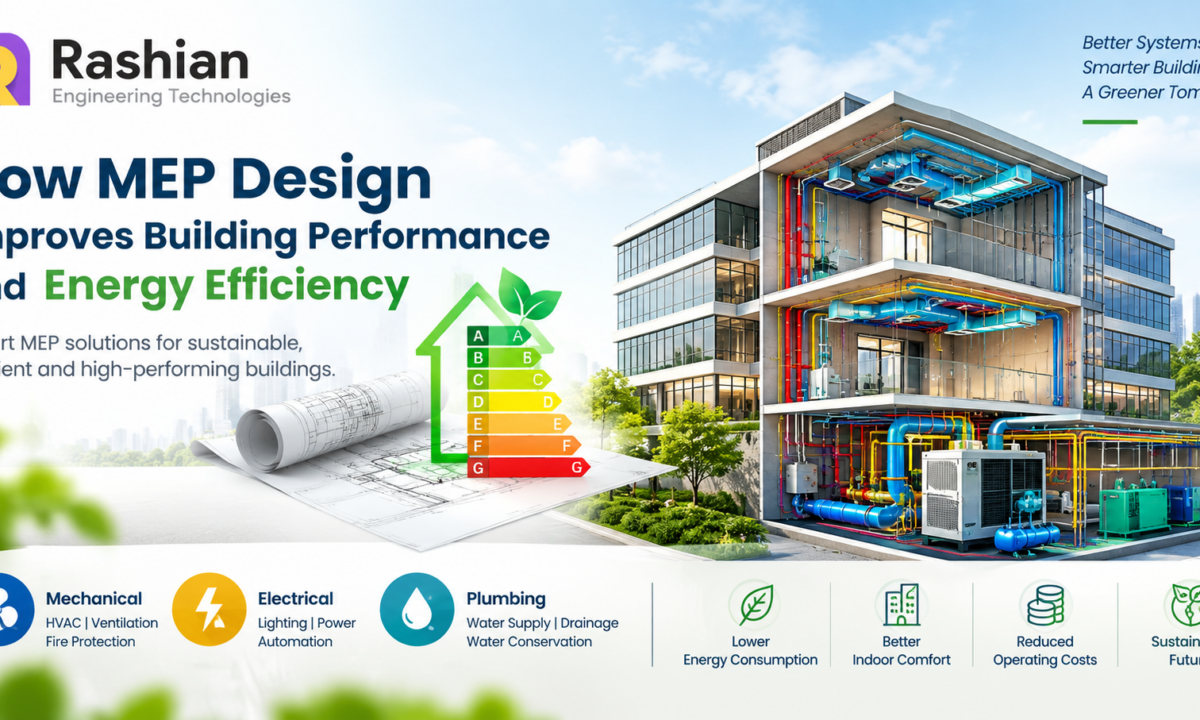
How MEP Design Improves Building Performance and Energy Efficiency
MEP Design for Energy Efficiency , Modern buildings are expected to do more than simply provide shelter. They need to be comfortable, safe, energy-efficient, sustainable, and cost-effective throughout their lifecycle. As energy costs continue to rise and environmental concerns become increasingly important, building owners and developers are looking for better ways to improve overall building performance.
One of the most important factors in achieving these goals is MEP design. MEP stands for Mechanical, Electrical, and Plumbing. These systems form the operational backbone of a building, supporting heating and cooling, lighting, power distribution, water supply, drainage, ventilation, fire protection, and many other essential functions.
A well-planned MEP design does not simply focus on installing individual systems. It considers how mechanical, electrical, and plumbing systems work together to create a building that performs efficiently and reliably. Through proper planning, energy analysis, system coordination, and the use of modern technologies, MEP design can significantly reduce energy consumption while improving occupant comfort and operational efficiency.
What Is MEP Design?
MEP design is the process of planning and designing the mechanical, electrical, and plumbing systems required for a building.
Mechanical Design
Mechanical systems mainly include:
- Heating, ventilation, and air-conditioning (HVAC)
- Chillers and cooling systems
- Air-handling units
- Ventilation systems
- Building automation systems
- Smoke extraction and ventilation
These systems are particularly important because HVAC can represent a significant portion of a building’s energy consumption.
Electrical Design
Electrical design covers:
- Power distribution
- Lighting systems
- Emergency power
- Electrical panels
- Generators
- Renewable energy integration
- Energy monitoring
- Low-voltage systems
Efficient electrical design ensures that power is distributed safely while minimizing unnecessary energy consumption.
Plumbing Design
Plumbing systems include:
- Water supply
- Drainage
- Sanitary systems
- Stormwater management
- Hot-water systems
- Water-saving fixtures
- Pumping systems
Efficient plumbing design can reduce water consumption, pumping energy, and maintenance requirements.
When these three disciplines are properly coordinated, they contribute to better overall building performance.
1. Reduces Energy Consumption
One of the biggest benefits of MEP design is its ability to reduce energy consumption.
Poorly designed mechanical and electrical systems can result in excessive energy use. For example, an oversized HVAC system may consume more electricity than necessary, while inefficient lighting can increase the building’s electrical load.
MEP engineers analyze the building’s requirements and select appropriately sized equipment. They consider factors such as:
- Building orientation
- Occupancy
- Internal heat loads
- Climate
- Building envelope
- Equipment loads
- Operating schedules
This allows designers to develop systems that provide the required performance without unnecessary energy consumption.
Energy-efficient HVAC equipment, LED lighting, variable-speed drives, smart controls, and efficient pumps can further reduce energy usage.
2. Improves HVAC Efficiency
HVAC systems have a major influence on both energy consumption and occupant comfort.
An effective MEP design ensures that heating and cooling systems are correctly sized according to the actual requirements of the building. Oversized systems may operate inefficiently and frequently switch on and off, while undersized systems may struggle to maintain comfortable indoor conditions.
MEP engineers can improve HVAC efficiency through:
- Proper load calculations
- Energy-efficient chillers
- Variable Air Volume (VAV) systems
- Variable-speed drives
- Efficient air distribution
- Heat recovery systems
- Smart thermostats
- Building management systems
- Zoning and temperature control
For example, zoning allows different areas of a building to receive different levels of heating or cooling depending on occupancy and usage. This avoids wasting energy in unoccupied spaces.
3. Enhances Indoor Air Quality and Occupant Comfort
Energy efficiency should not come at the expense of occupant health and comfort.
MEP design helps maintain appropriate indoor temperature, humidity, ventilation, and air quality. Proper ventilation removes pollutants, odors, excess moisture, and carbon dioxide from occupied spaces.
A well-designed HVAC system can provide:
- Adequate fresh-air supply
- Effective air circulation
- Temperature control
- Humidity management
- Filtration
- Reduced indoor pollutants
Better indoor environmental quality can improve occupant comfort and productivity, particularly in offices, hospitals, schools, hotels, and commercial buildings.
4. Optimizes Lighting and Electrical Systems
Lighting is another important area where MEP design can improve energy efficiency.
Modern electrical design focuses on providing sufficient illumination while avoiding unnecessary electricity consumption.
Energy-efficient strategies include:
- LED lighting
- Occupancy sensors
- Daylight sensors
- Automatic lighting controls
- Timers
- Dimming systems
- Smart building controls
Daylight harvesting is particularly useful in buildings with large windows or skylights. Sensors can detect available natural light and automatically reduce artificial lighting when sufficient daylight is present.
MEP designers also calculate electrical loads carefully to ensure that transformers, cables, panels, generators, and other equipment are appropriately sized.
5. Supports Renewable Energy Integration
Modern MEP design increasingly considers renewable energy sources such as solar power.
Solar photovoltaic systems can be integrated into a building’s electrical design to generate clean electricity. MEP engineers need to consider factors such as electrical loads, available roof space, inverter capacity, energy storage, distribution systems, and grid connectivity.
When renewable energy is combined with energy-efficient mechanical and electrical systems, buildings can significantly reduce their dependence on conventional energy sources.
MEP design can also support technologies such as:
- Solar water heating
- Battery energy storage
- Electric vehicle charging
- Heat pumps
- Smart energy management
This makes MEP planning an important component of sustainable building design.
6. Reduces Water Consumption
Plumbing design plays an important role in improving resource efficiency.
Traditional plumbing systems can consume large quantities of water, especially in commercial buildings, hotels, hospitals, and residential developments.
MEP engineers can reduce water consumption through:
- Low-flow faucets
- Water-efficient toilets
- Sensor-operated fixtures
- Efficient water pumps
- Rainwater harvesting
- Greywater reuse
- Efficient hot-water systems
- Leak detection systems
Efficient plumbing design not only saves water but can also reduce the energy required for water pumping and heating.
7. Improves Building Automation and Control
Smart building technologies are changing the way MEP systems operate.
Building Management Systems (BMS) and Building Automation Systems (BAS) allow different building systems to communicate and operate more intelligently.
For example, a building automation system can monitor:
- Temperature
- Humidity
- Energy consumption
- Lighting
- HVAC operation
- Equipment performance
- Occupancy
- Water usage
Based on this information, systems can automatically adjust their operation.
For example, HVAC equipment can reduce its output when occupancy decreases. Lighting can be switched off in empty rooms. Energy consumption can be monitored to identify unusual patterns.
This combination of automation and MEP design can significantly improve operational efficiency.
8. Enables Better System Coordination
MEP systems often occupy a significant amount of space within a building. Ducts, pipes, electrical conduits, equipment, and other services must fit within the available architectural and structural spaces.
Poor coordination can lead to clashes, delays, rework, and inefficient installations.
Modern MEP design often uses Building Information Modeling (BIM) to coordinate systems before construction begins.
With 3D MEP modeling, engineers can identify potential clashes between:
- HVAC ducts and structural beams
- Plumbing pipes and electrical conduits
- Equipment and architectural elements
- Fire protection systems and other services
Early clash detection reduces rework and helps improve construction efficiency.
9. Reduces Maintenance and Operating Costs
Energy-efficient systems are often easier and more cost-effective to operate when they are properly designed.
MEP design considers equipment accessibility, maintenance requirements, system controls, and expected operating conditions.
For example, strategically located mechanical equipment can make maintenance easier. Properly designed electrical systems can reduce overload risks. Accessible plumbing layouts can simplify inspection and repairs.
Over the building’s lifecycle, these improvements can reduce:
- Energy bills
- Repair costs
- Equipment downtime
- Maintenance expenses
- Replacement costs
Therefore, MEP design should be viewed as a long-term investment rather than simply a construction-stage requirement.
10. Supports Sustainable Building Certifications
Efficient MEP systems can contribute significantly toward sustainable building objectives and green building certifications.
Depending on the project and certification system, energy-efficient HVAC, lighting, water conservation, renewable energy, and monitoring systems may contribute toward sustainability goals.
MEP designers can help projects achieve better environmental performance by incorporating:
- Energy-efficient equipment
- Water-saving technologies
- Renewable energy
- Smart controls
- Efficient lighting
- Energy monitoring
- Improved ventilation
- Heat recovery
Sustainable MEP design can therefore help reduce a building’s environmental impact while improving its long-term economic performance.
11. Improves Fire Safety and Emergency Performance
MEP systems also play a critical role in building safety.
Fire protection and life-safety systems must be properly coordinated with mechanical, electrical, and plumbing services.
Depending on building requirements, these systems may include:
- Fire alarms
- Fire pumps
- Sprinkler systems
- Smoke extraction
- Emergency lighting
- Backup power
- Fire-fighting water systems
Proper MEP coordination ensures that these systems can operate effectively during emergencies.
12. Uses Energy Modeling for Better Decisions
Energy modeling can help engineers understand how a building is expected to perform before construction begins . MEP Design for Energy Efficiency
Different design options can be evaluated to estimate their impact on energy consumption.
For example, designers may compare:
- Different HVAC systems
- Lighting strategies
- Building orientations
- Insulation levels
- Window configurations
- Renewable energy options
- Control strategies
This allows project teams to make informed decisions based on expected performance rather than relying only on assumptions.
The Role of BIM in Energy-Efficient MEP Design
BIM has become an important technology for modern MEP engineering.
A BIM model provides a coordinated digital representation of building systems. It allows architects, structural engineers, MEP engineers, contractors, and other stakeholders to work with coordinated project information.
MEP BIM can help with:
- 3D system coordination
- Clash detection
- Quantity takeoffs
- Equipment placement
- Construction planning
- System visualization
- Documentation
- Facility management
When combined with energy analysis and simulation, BIM can support better decisions throughout the project lifecycle.
Best Practices for Energy-Efficient MEP Design
To maximize building performance, project teams should follow several best practices:
Start MEP Planning Early
MEP requirements should be considered during the early design stages instead of being added later.
Perform Accurate Load Calculations
Accurate calculations help prevent oversized or undersized equipment.
Select High-Efficiency Equipment
Energy-efficient HVAC units, pumps, motors, lighting, and other equipment can reduce operating costs.
Use Smart Controls
Automation can adjust systems according to occupancy, schedules, and actual building conditions.
Coordinate Through BIM
BIM-based coordination reduces clashes and improves installation efficiency.
Consider Lifecycle Costs
The cheapest equipment is not always the most economical option. Designers should consider energy use, maintenance, durability, and replacement costs.
Monitor Building Performance
Energy meters and smart monitoring systems help building owners identify inefficiencies and continuously improve performance.
Conclusion
MEP design for Energy Efficiency is a critical part of creating high-performing, energy-efficient, and sustainable buildings. Mechanical, electrical, and plumbing systems influence almost every aspect of a building’s operation—from indoor comfort and air quality to energy consumption, water usage, safety, and maintenance.
Through accurate engineering calculations, efficient equipment selection, smart controls, renewable energy integration, water-saving technologies, and BIM-based coordination, MEP design can significantly improve building performance.
As buildings become smarter and sustainability becomes increasingly important, the role of MEP engineering will continue to grow. Investing in a well-coordinated MEP design during the early stages of a project can help reduce operational costs, improve occupant comfort, minimize environmental impact, and deliver greater long-term value.
Ultimately, efficient MEP design is not just about designing building services—it is about creating buildings that perform better, consume fewer resources, and remain efficient throughout their lifecycle.