

Blog
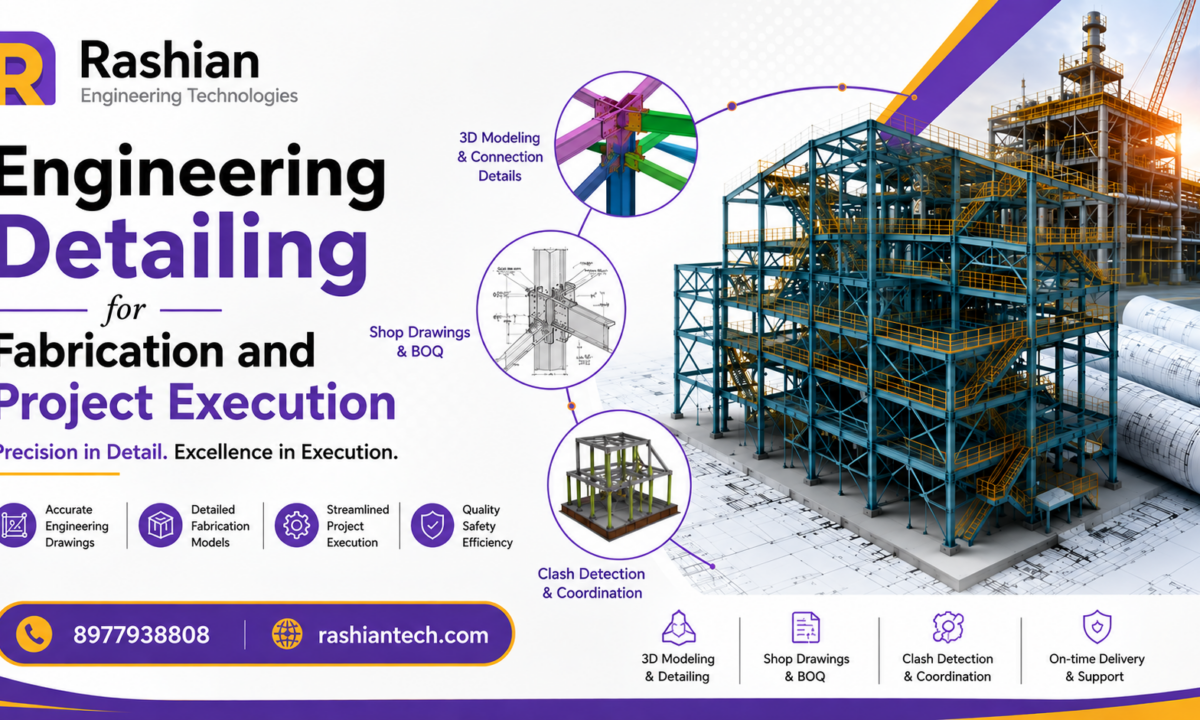
How Engineering Detailing Improves Fabrication and Project Execution
Engineering detailing In modern construction and engineering projects, accuracy, coordination, and efficient execution are essential for achieving successful results. A project may have an excellent architectural concept and strong structural design, but without accurate engineering detailing, fabrication and site execution can become difficult, costly, and time-consuming.
Engineering detailing transforms engineering designs into clear, practical, and fabrication-ready information. It provides detailed drawings, dimensions, material specifications, connections, and other technical information required by fabricators and construction teams. As a result, engineering detailing acts as an important link between design and actual construction.
With the growing use of BIM, CAD, 3D modeling, and digital coordination, engineering detailing has become even more valuable. It helps project teams identify problems before fabrication, reduce material waste, improve communication, and complete construction activities more efficiently.
In this blog, we will understand how engineering detailing improves fabrication and project execution and why it is an important part of modern construction projects.
What Is Engineering Detailing?
Engineering detailing is the process of converting engineering designs and structural concepts into detailed technical drawings and models that can be directly used for fabrication and construction.
Depending on the project, engineering detailing may include:
- Structural steel detailing
- Reinforcement detailing
- Mechanical detailing
- Piping detailing
- Architectural detailing
- MEP detailing
- Shop drawings
- Fabrication drawings
- Assembly drawings
- Connection details
- Material and quantity information
- 3D engineering models
These details provide fabricators and site teams with accurate information about how individual components should be manufactured, assembled, and installed.
Therefore, detailing is not simply about preparing drawings. It is about creating clear and coordinated construction information that supports the entire project lifecycle.
1. Improves Fabrication Accuracy
One of the biggest advantages of engineering detailing is improved fabrication accuracy.
Fabrication involves manufacturing structural components, equipment, pipes, supports, frames, and other elements based on engineering information. Even a small dimensional error can create problems during assembly or installation.
Detailed fabrication drawings provide essential information such as:
- Exact dimensions
- Material specifications
- Component locations
- Connection details
- Hole locations
- Welding information
- Bolt specifications
- Cutting requirements
- Assembly instructions
When fabricators receive accurate information, they can manufacture components according to project requirements.
This reduces the possibility of incorrect fabrication and minimizes the need for modifications later.
2. Reduces Errors and Rework
Errors during fabrication or construction can significantly increase project costs.
For example, if a steel beam is fabricated with an incorrect connection location, it may not fit properly at the construction site. The component may need to be modified, returned to the fabrication facility, or completely remanufactured.
Engineering detailing helps identify such issues before fabrication begins.
Through detailed drawings and 3D models, project teams can review:
- Dimensions
- Connections
- Clearances
- Component locations
- Structural interfaces
- Equipment access
- Installation requirements
Finding problems during the detailing stage is generally much easier and less expensive than correcting them during construction.
As a result, engineering detailing helps reduce rework, delays, material losses, and additional labor costs.
3. Supports Better Communication
Large construction projects involve many professionals, including architects, structural engineers, MEP engineers, contractors, fabricators, project managers, and site workers.
Each team needs accurate information to perform its responsibilities.
Engineering detailing provides a common technical reference that helps different teams understand the project requirements.
For example, a detailed structural drawing can show:
- Member sizes
- Connection types
- Elevations
- Section details
- Bolt arrangements
- Welding requirements
- Assembly sequences
Because the information is clearly documented, communication becomes easier between design, fabrication, and construction teams.
Better communication also reduces misunderstandings and improves coordination.
4. Helps Identify Design and Coordination Problems
Modern construction projects often contain complex systems that need to work together.
Structural components must coordinate with architectural elements, electrical systems, HVAC equipment, plumbing systems, fire protection systems, and other building services.
If these systems are not properly coordinated, clashes can occur during construction.
For example, an HVAC duct may interfere with a structural beam or a plumbing pipe may pass through an area occupied by another service.
Using 3D modeling and BIM-based engineering detailing, project teams can identify potential clashes before construction begins.
This process allows teams to make necessary adjustments during the design and detailing stage instead of making expensive changes at the site.
5. Improves Material Management
Accurate detailing also contributes to better material planning.
Detailed drawings and models can provide information about the quantity, size, type, and specification of materials required for fabrication and construction.
This helps project teams:
- Prepare accurate material lists
- Reduce unnecessary purchases
- Minimize material wastage
- Improve inventory planning
- Plan fabrication requirements
- Control project costs
For structural steel projects, for example, detailing can help identify individual members, plates, bolts, and other components required for fabrication.
Better material planning can significantly improve project efficiency.
6. Speeds Up Fabrication
Fabrication facilities depend on accurate information to manufacture components efficiently.
When drawings are complete and clearly prepared, fabricators spend less time requesting clarification from engineers or project managers.
Detailed fabrication information can help workers understand:
- What needs to be fabricated
- What dimensions are required
- Where components should be connected
- Which materials should be used
- How components should be assembled
As a result, fabrication workflows become more organized.
Digital models can also support automated or semi-automated fabrication processes, helping improve productivity and consistency.
7. Makes Site Installation Easier
Fabrication is only one part of a construction project. After components are manufactured, they must be transported, assembled, and installed at the project site.
Engineering detailing supports this stage by providing installation teams with accurate information.
Installation drawings can indicate:
- Component locations
- Assembly details
- Connection information
- Orientation
- Elevations
- Reference points
- Installation requirements
When workers have clear information, installation can be completed more efficiently.
This is particularly important for complex projects where hundreds or thousands of individual components need to be installed correctly.
8. Improves Project Scheduling
Project delays can occur when fabrication, material procurement, and site installation are not properly coordinated.
Engineering detailing helps project managers plan these activities more effectively.
For example, detailed drawings can help identify which components are required first and which items can be fabricated later.
This supports better coordination between:
Design → Detailing → Procurement → Fabrication → Delivery → Installation
When each stage receives accurate information on time, project workflows become more predictable.
Therefore, engineering detailing can contribute to improved project scheduling and faster completion.
9. Supports BIM and Digital Construction
Building Information Modeling has changed how modern construction projects are designed, coordinated, and executed.
Engineering detailing plays an important role in developing accurate BIM models.
A detailed BIM model can include information about:
- Geometry
- Dimensions
- Materials
- Connections
- Equipment
- Structural components
- MEP systems
- Quantities
- Installation requirements
These models can be used for coordination, clash detection, quantity estimation, fabrication planning, and construction management.
The combination of engineering detailing and BIM provides project teams with a more reliable digital representation of the actual construction environment.
10. Improves Quality Control
Quality control is another important benefit of engineering detailing.
Detailed drawings establish clear technical requirements that fabricators and contractors can follow.
Quality teams can compare fabricated components against approved drawings and specifications to verify whether the work meets project requirements.
This helps ensure:
- Correct dimensions
- Proper material selection
- Accurate connections
- Correct assembly
- Compliance with design requirements
Clear documentation also makes inspections and approvals easier.
11. Helps Control Project Costs
Cost control is a major priority for every construction project.
Engineering detailing can help reduce costs by preventing avoidable mistakes.
Poor detailing may result in:
- Material wastage
- Fabrication errors
- Rework
- Installation problems
- Labor inefficiencies
- Project delays
- Additional transportation costs
Accurate detailing helps minimize these risks.
Although engineering detailing represents an investment during the early stages of a project, it can generate significant savings during fabrication and construction.
12. Creates Better Project Documentation
Construction projects require proper documentation for approvals, fabrication, installation, inspection, and future maintenance.
Engineering detailing creates a structured set of technical documents that can be used throughout the project lifecycle.
These may include:
- Shop drawings
- Fabrication drawings
- Assembly drawings
- Installation drawings
- 3D models
- Material lists
- Connection details
- Revision records
Well-organized documentation improves project traceability and makes future modifications easier.
Best Practices for Effective Engineering Detailing
To achieve the best results, engineering detailing should follow a systematic process.
Understand the Design Requirements
Detailers should thoroughly review structural and engineering designs before beginning detailed work.
Use Accurate Software and Tools
CAD, BIM, and 3D modeling software can improve accuracy and coordination.
Conduct Clash Detection
Potential conflicts between structural, architectural, and MEP systems should be identified before fabrication.
Follow Project Standards
Drawings should comply with applicable project specifications, codes, standards, and client requirements.
Maintain Revision Control
Design changes should be properly documented and updated across drawings and models.
Coordinate With Fabricators and Contractors
Early communication with fabrication and construction teams can help identify practical installation and manufacturing requirements.
Conclusion
Engineering detailing is a critical bridge between engineering design and real-world construction. It provides fabricators and construction teams with accurate, detailed, and practical information needed to manufacture and install project components correctly.
From improving fabrication accuracy and reducing rework to supporting BIM coordination, material management, quality control, and project scheduling, effective engineering detailing can have a significant impact on overall project performance.
As construction projects become more complex, the demand for accurate digital models, coordinated drawings, and fabrication-ready documentation continues to grow. By investing in professional engineering detailing services, companies can improve productivity, reduce project risks, control costs, and achieve smoother project execution.
Ultimately, accurate detailing does more than create drawings—it helps turn engineering concepts into efficiently fabricated and successfully constructed projects.