
Blog
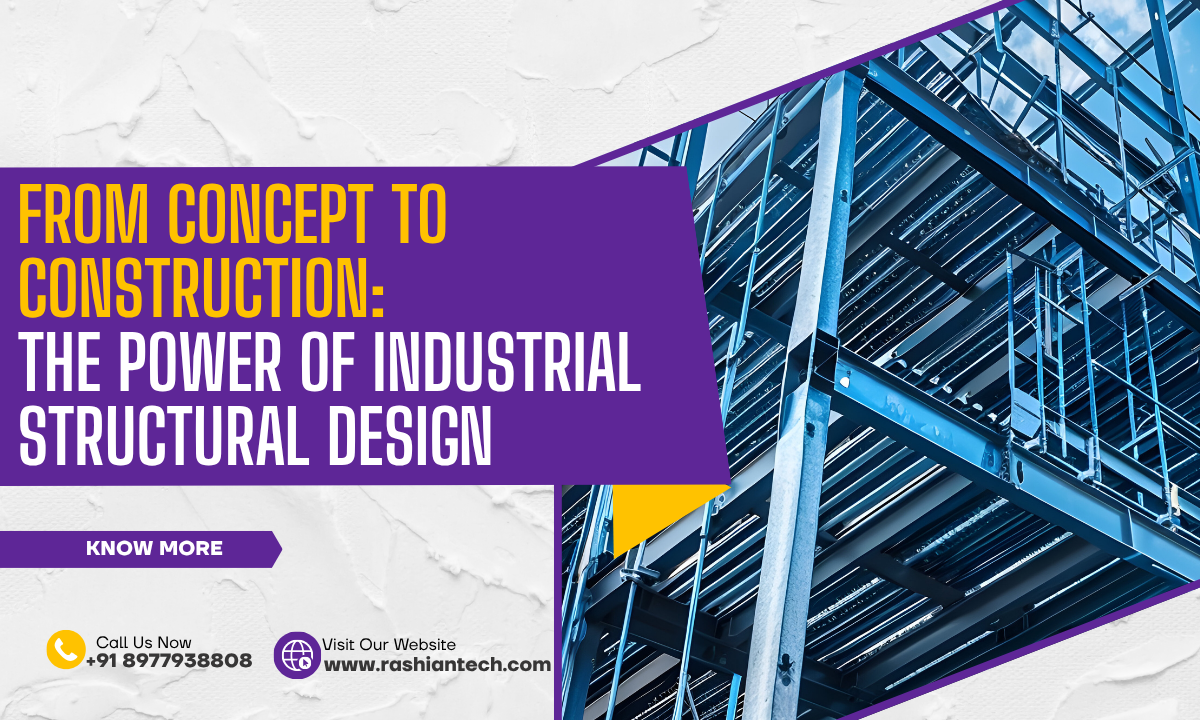
From Concept to Construction: The Power of Industrial Structural Design
Industrial development demands more than strong buildings—it requires engineering precision, structural reliability, and designs that support long-term operational efficiency. Every manufacturing facility, warehouse, processing plant, power station, logistics hub, and heavy engineering unit depends on a well-planned structural framework that can safely withstand operational loads, environmental conditions, and future expansion requirements. As industries continue to evolve, investing in intelligent structural engineering has become essential for achieving sustainable and cost-effective infrastructure.
AtRashian Engineering Technologies, we specialize in delivering advanced engineering solutions that combine technical expertise with innovative design methodologies. Our experienced engineering team focuses on creating safe, efficient, and customized structural solutions that align with project objectives while complying with national and international engineering standards. From concept development to final execution, we help clients optimize structural performance without compromising safety, quality, or functionality.
Modern engineering projects require careful planning, detailed structural analysis, and seamless collaboration between architects, consultants, fabricators, and construction teams. This guide explores the importance of structural engineering, its key principles, benefits, design process, applications, and why professional engineering expertise plays a critical role in successful industrial construction.
Understanding Modern Structural Engineering
Every industrial facility is exposed to multiple forces throughout its service life, including dead loads, live loads, wind pressure, seismic activity, equipment vibrations, and operational stresses. Structural engineering ensures these forces are properly evaluated so that every building remains stable, safe, and durable under varying conditions.
Unlike conventional drafting approaches, modern structural engineering relies on advanced analysis software, digital modeling, and detailed calculations to create optimized structural systems. Engineers evaluate every component before construction begins, ensuring that columns, beams, foundations, roof systems, and steel frameworks perform efficiently under expected loading conditions.
This scientific approach minimizes design uncertainties while improving construction quality and long-term structural performance.
Why Precision Matters in Industrial Construction
Industrial projects involve significant investments, making structural accuracy one of the most critical aspects of project planning. Even small design inconsistencies can lead to increased material consumption, construction delays, costly modifications, or operational risks after project completion.
Accurate engineering improves coordination between structural systems, architectural layouts, utility networks, machinery foundations, and fabrication requirements. Early planning also helps contractors optimize construction sequencing and reduce unnecessary site complications.
Organizations increasingly invest in Industrial Structural Design because precision during the planning stage directly contributes to safer construction, improved productivity, and long-term operational efficiency.
Core Elements of Structural Engineering
Successful engineering projects depend on several interconnected design elements that work together to create safe and durable infrastructure.
Site Evaluation
Every project begins with understanding the site’s geological conditions, environmental factors, load requirements, and operational objectives. Proper evaluation provides the foundation for reliable engineering decisions.
Structural Analysis
Engineers calculate the effects of various loads and external forces using specialized engineering software. These calculations determine the strength, stability, and performance of every structural component before construction begins.
Material Selection
Selecting appropriate construction materials significantly impacts durability, safety, maintenance, and project costs. Engineers evaluate steel grades, concrete specifications, reinforcement requirements, and corrosion protection systems according to project conditions.
Connection Design
Bolted and welded connections play an important role in maintaining structural integrity. Proper connection detailing ensures that forces are transferred safely throughout the structure while maintaining overall stability.
These engineering practices enable Industrial Structural Design to deliver reliable solutions for demanding industrial environments.
Benefits of Advanced Structural Planning
Modern structural engineering provides significant advantages that extend beyond the construction phase.
Enhanced Safety
Comprehensive engineering analysis ensures structures safely withstand operational loads, environmental conditions, and emergency situations while complying with applicable design standards.
Improved Cost Efficiency
Optimized structural systems reduce unnecessary material usage without affecting safety or performance. This results in lower construction costs and improved project value.
Faster Project Execution
Detailed engineering documentation simplifies fabrication and construction activities, reducing delays caused by design revisions or on-site modifications.
Better Long-Term Performance
Well-designed structures require less maintenance, perform reliably under varying operational conditions, and support future expansion when business requirements change.
These advantages explain why Industrial Structural Design has become a critical component of successful industrial infrastructure development.
Materials Used in Modern Industrial Structures
Material selection directly influences structural performance, durability, maintenance requirements, and project economics.
Structural steel remains one of the most preferred materials because of its exceptional strength-to-weight ratio, design flexibility, and faster construction capabilities. Reinforced concrete provides excellent load-bearing capacity and long-term durability for foundations and heavy equipment support systems.
Composite construction combines the advantages of steel and concrete to achieve greater efficiency while reducing structural weight. Specialized coatings, protective finishes, and corrosion-resistant materials further improve service life, particularly in harsh industrial environments exposed to moisture, chemicals, or extreme temperatures.
Selecting appropriate materials during the design stage allows engineers to optimize both structural performance and lifecycle costs.
Applications Across Multiple Industries
Structural engineering supports a wide range of industrial sectors requiring reliable and efficient infrastructure solutions.
Manufacturing plants require strong frameworks capable of supporting heavy production equipment and overhead crane systems.
Warehouses and logistics centers depend on large clear-span structures that maximize storage capacity and improve operational efficiency.
Power plants require robust structural systems designed to accommodate turbines, generators, piping networks, and heavy mechanical equipment.
Oil and gas facilities demand structures capable of performing under demanding environmental conditions while maintaining high safety standards.
Food processing units, pharmaceutical facilities, automotive manufacturing plants, cement industries, airports, commercial complexes, and institutional buildings also rely on Industrial Structural Design to achieve efficient project execution and long-term structural reliability.
The Role of Technology in Structural Engineering
Engineering technology has transformed the way structures are designed, analyzed, and executed. Advanced software enables engineers to create intelligent three-dimensional models, perform complex structural simulations, evaluate multiple design alternatives, and optimize material utilization before construction begins.
Digital collaboration platforms also improve communication between architects, structural consultants, contractors, and fabricators, ensuring every stakeholder works with accurate project information.
Organizations adopting Industrial Structural Design supported by advanced engineering technologies experience improved project coordination, greater accuracy, and more efficient construction workflows.
The Structural Design Process
Every successful industrial project follows a systematic engineering approach that ensures safety, functionality, and long-term performance. The process begins with understanding the client’s operational requirements, production workflow, equipment loads, future expansion plans, and site conditions.
Engineers then perform detailed calculations, develop structural layouts, and prepare analytical models to evaluate different load combinations. Once the design is validated, fabrication drawings, connection details, and construction documents are prepared to support seamless project execution.
A structured workflow minimizes design revisions, improves coordination between stakeholders, and ensures every structural component performs as intended throughout its service life.
Professional Industrial Structural Design enables organizations to move confidently from planning to execution while maintaining engineering accuracy at every stage.
Designing for Safety and Performance
Safety remains the highest priority in every industrial facility. Structural systems must be capable of resisting gravity loads, machinery vibrations, wind pressure, seismic forces, and operational stresses without compromising stability.
Engineers follow recognized design standards and conduct extensive structural analysis before approving construction documents. Every beam, column, truss, foundation, and connection is evaluated to ensure the entire framework performs efficiently under expected conditions.
Careful engineering reduces structural risks while improving the overall reliability and lifespan of industrial facilities.
This is why businesses continue investing in Industrial Structural Design for mission-critical projects where performance and safety cannot be compromised.
Overcoming Engineering Challenges
Industrial construction often presents unique engineering challenges that require practical and innovative solutions. Large clear spans, heavy equipment foundations, overhead cranes, elevated platforms, process piping, and future expansion requirements must all be considered during the design stage.
Engineers also evaluate soil conditions, environmental exposure, corrosion risks, construction sequencing, and operational accessibility before finalizing structural systems.
Addressing these challenges early prevents costly redesigns and improves construction efficiency throughout the project lifecycle.
Experienced professionals delivering Industrial Structural Design help clients overcome technical complexities while maintaining quality, safety, and project schedules.
Supporting Sustainable Industrial Development
Modern engineering focuses not only on structural strength but also on sustainability and resource efficiency. Optimized structural systems reduce unnecessary material consumption while maintaining high performance standards.
Efficient designs also reduce fabrication waste, simplify transportation, improve construction productivity, and lower long-term maintenance requirements. Durable structures contribute to extended service life, reducing the environmental impact associated with major repairs or reconstruction.
Organizations increasingly recognize that Industrial Structural Design supports sustainable development by balancing engineering performance with responsible resource utilization.
Why Choose Rashian Engineering Technologies
Choosing the right engineering partner is essential for delivering successful industrial projects. Rashian Engineering Technologies combines technical expertise, advanced engineering software, and industry knowledge to provide customized structural solutions for diverse sectors.
Our engineering team follows a systematic design approach, ensuring every project is developed with precision, compliance, and operational efficiency. From concept development and structural analysis to detailing, fabrication support, and construction coordination, we focus on delivering reliable engineering solutions that create lasting value.
Clients trust Industrial Structural Design delivered by Rashian Engineering Technologies because of our commitment to quality, innovation, timely project delivery, and customer satisfaction.
Future Trends in Structural Engineering
The future of industrial construction is driven by digital transformation, automation, and intelligent engineering technologies. Advanced analysis software, Building Information Modeling, artificial intelligence, and cloud-based collaboration continue to improve design accuracy and project coordination.
Engineers are also adopting performance-based design approaches that optimize structural efficiency while supporting faster construction and lower lifecycle costs.
As industries continue expanding, the demand for Industrial Structural Design will grow across manufacturing facilities, logistics parks, infrastructure developments, energy projects, and commercial buildings requiring safe, efficient, and future-ready structures.
Conclusion
Industrial infrastructure forms the backbone of economic growth, making structural engineering one of the most important aspects of successful project development. Well-engineered structures provide the strength, stability, flexibility, and reliability required to support modern industrial operations while ensuring long-term safety and operational efficiency.
From careful planning and structural analysis to detailed engineering and construction support, every phase contributes to creating facilities capable of meeting today’s performance expectations and tomorrow’s expansion needs.
Partnering with Rashian Engineering Technologies means working with experienced professionals dedicated to delivering innovative engineering solutions tailored to your project requirements. Our commitment to precision, quality, and technical excellence enables clients to achieve efficient project execution while minimizing risks and maximizing long-term value.
Whether you are developing a manufacturing facility, warehouse, commercial complex, power plant, or infrastructure project, investing inIndustrial Structural Design ensures a solid foundation for sustainable growth, reliable performance, and engineering excellence.