
Blog
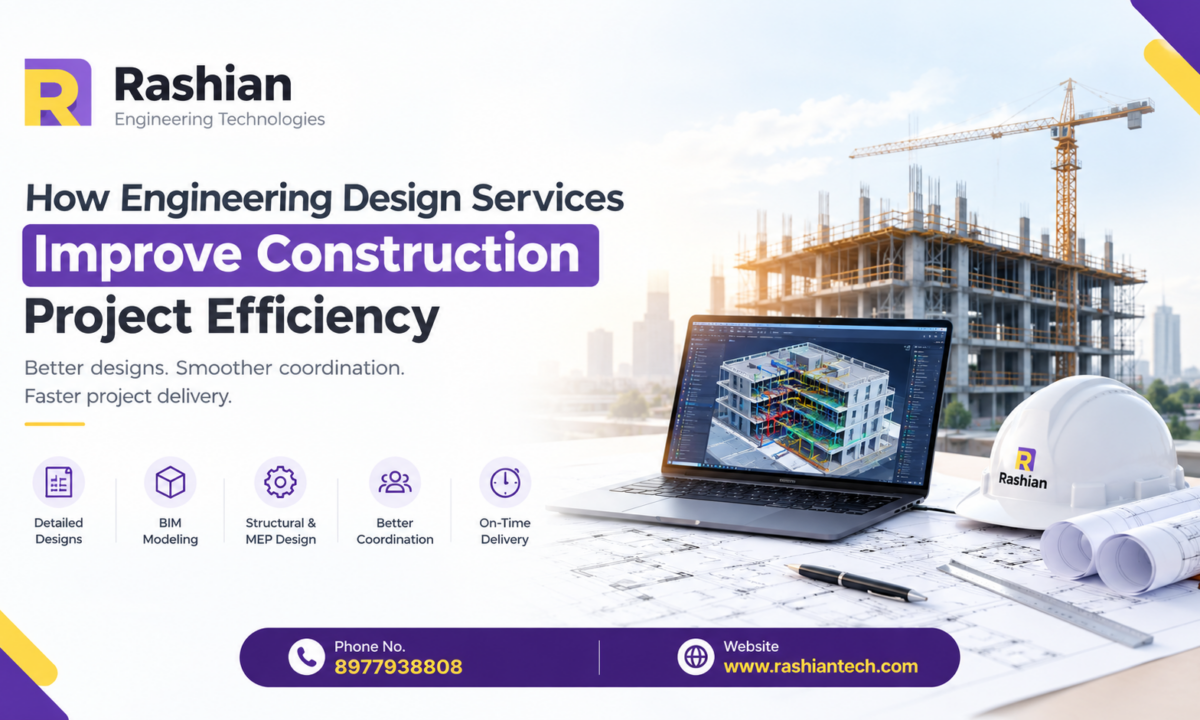
How Engineering Design Services Improve Construction Project Efficiency
Engineering Design Services , Construction projects involve multiple teams, complex designs, strict deadlines, and significant investments. From residential buildings to commercial complexes and industrial facilities, every project requires careful planning and accurate execution. Even a small design mistake can lead to material waste, construction delays, budget increases, and safety concerns.
This is where engineering design services play an important role. Professional engineering design helps transform project concepts into detailed, practical, and accurate plans that construction teams can follow. By combining technical knowledge, advanced software, and proper coordination, engineering design services improve construction efficiency and support better project outcomes.
In this blog, we will explore how engineering design services help reduce errors, control costs, improve coordination, and deliver successful construction projects.
What Are Engineering Design Services?
Engineering design services involve creating technical drawings, models, calculations, and documentation required for planning and constructing a building or infrastructure project. These services cover different engineering disciplines, including structural engineering, mechanical engineering, electrical engineering, and plumbing design.
Depending on the project requirements, engineering design may include:
- Structural design and detailing
- Architectural and engineering drawings
- Mechanical, Electrical, and Plumbing (MEP) design
- Building Information Modeling (BIM)
- Steel detailing and fabrication drawings
- Shop drawings and construction documentation
- Engineering calculations and material specifications
- Clash detection and design coordination
These services help construction companies understand how different components of a project should be designed, manufactured, and installed.
1. Improves Project Planning
Effective planning is one of the most important factors in construction project efficiency. Without proper planning, construction teams may face unclear responsibilities, material shortages, design changes, and unexpected delays.
Engineering design services provide detailed drawings and technical information before construction begins. These documents help project managers understand the scope of work, identify required materials, and organize construction activities.
For example, structural drawings show the location of columns, beams, slabs, and foundations. MEP drawings identify the routing of electrical cables, plumbing pipes, and mechanical systems.
With this information, teams can prepare a more realistic construction schedule and coordinate different activities in advance.
Better planning reduces confusion and helps the project move smoothly from design to execution.
2. Reduces Design Errors and Rework
Design errors can create serious problems during construction. Incorrect dimensions, missing details, or coordination issues may require work to be completed again. This increases labor costs, material consumption, and project duration.
Professional engineering design services help reduce these problems through detailed drawings, technical reviews, and design verification.
Engineers use calculations and specialized software to check whether designs meet project requirements. They also review connections, dimensions, load conditions, and other technical details before drawings are issued for construction.
When errors are identified during the design stage, they can usually be corrected more easily and at a lower cost than after construction has started.
Accurate engineering drawings therefore help reduce rework and improve overall construction productivity.
3. Supports Better Cost Control
Construction budgets depend on accurate quantities, efficient material use, and proper planning. Poor design coordination can lead to material wastage, additional labor, and unexpected expenses.
Engineering design services help improve cost control by providing detailed information about materials, dimensions, and construction requirements.
For example, structural and steel detailing drawings can help fabricators understand the exact sizes and quantities of steel components. MEP design can support better planning of pipes, ducts, cables, and equipment.
Accurate drawings also help quantity surveyors and project managers prepare more reliable estimates.
Although professional design services involve an initial investment, they can help reduce avoidable expenses throughout the construction process.
4. Enhances Coordination Between Project Teams
Construction projects involve architects, structural engineers, MEP consultants, contractors, fabricators, and site supervisors. Each team works on different aspects of the same project.
If these teams do not coordinate properly, their designs may conflict with one another.
For example, an electrical cable route may pass through a structural beam, or an HVAC duct may interfere with plumbing pipes. Such issues can create installation difficulties and require changes at the construction site.
Engineering design services improve coordination by combining technical information from different disciplines. Shared drawings and coordinated models help teams understand how their work connects with other project components.
Better coordination reduces misunderstandings and supports smoother execution.
5. Improves Construction Accuracy
Construction accuracy is essential for maintaining structural quality, safety, and design performance. Even a small dimensional error can affect the installation of other components.
Engineering drawings provide construction teams with precise information about measurements, locations, materials, and connections.
For example, steel fabrication drawings specify the dimensions, hole locations, connection details, and assembly requirements of steel members. These details help fabricators manufacture components according to the approved design.
Similarly, structural drawings guide site teams during the placement of reinforcement, formwork, and concrete elements.
Accurate technical documentation helps reduce mistakes and improves the quality of finished construction work.
6. Makes BIM and 3D Modeling More Effective
Building Information Modeling, commonly known as BIM, has become an important part of modern construction design. BIM allows project teams to create a digital representation of a building and coordinate different engineering systems.
Engineering design services support BIM by developing accurate 3D models for structural, architectural, and MEP components.
These models help project teams visualize the building before construction begins. They can review the placement of equipment, examine complex structural elements, and identify possible coordination issues.
BIM also supports the preparation of drawings, quantity information, and project documentation.
By improving design visibility and coordination, BIM-based engineering design services help construction teams make better decisions and reduce avoidable problems.
7. Helps Identify and Resolve Design Conflicts
Design conflicts are common in large construction projects, especially when several engineering disciplines work independently.
A clash may occur when two components occupy the same space or when a system cannot be installed as planned.
For example, a large ventilation duct may conflict with a beam, or a drainage pipe may interfere with an electrical installation.
Through coordinated design reviews and clash detection, engineering teams can identify these issues before they affect construction.
Resolving conflicts during the design stage is generally easier than making changes after materials have been purchased or installed.
This improves site productivity and reduces the risk of costly delays.
8. Supports Faster Fabrication and Installation
Engineering design services provide fabricators and contractors with the technical information required to manufacture and install building components.
Detailed drawings help workers understand the sequence of assembly, component dimensions, connection methods, and installation requirements.
In steel construction, accurate shop drawings and fabrication details support the production of columns, beams, trusses, and other structural elements.
In MEP projects, coordinated drawings help contractors plan the installation of ducts, pipes, electrical systems, and mechanical equipment.
When fabrication and installation teams receive clear and accurate information, they can work more efficiently and reduce unnecessary clarification requests.
9. Improves Material Management
Material management is an important part of construction project efficiency. Poor material planning can result in shortages, excess inventory, wastage, and delays.
Engineering design services help project teams understand material requirements before construction begins.
Detailed drawings and digital models provide useful information about the size, quantity, and location of different components. This supports better purchasing decisions and helps contractors organize material deliveries.
For example, steel detailing can assist in planning steel member quantities, while MEP drawings can help estimate the required lengths of pipes, ducts, and cables.
Better material planning reduces waste and supports more efficient use of project resources.
10. Strengthens Safety and Structural Reliability
Construction safety depends on proper design, engineering calculations, and correct execution. Engineering design services help ensure that structural and building systems are planned according to applicable project requirements.
Structural engineers evaluate loads, material properties, connections, and other technical factors to develop suitable designs.
Detailed engineering documentation also helps construction teams understand how components should be installed and assembled.
For complex structures, accurate design and detailing are especially important because incorrect fabrication or installation may affect stability and safety.
By supporting reliable engineering decisions and clear construction information, professional design services contribute to safer and more dependable buildings.
11. Helps Meet Project Deadlines
Construction delays can affect budgets, client satisfaction, and the profitability of a project. Delays may occur because of design changes, incomplete drawings, coordination problems, or late approvals.
Engineering design services help reduce these risks by preparing documentation in advance and supporting timely technical decisions.
When construction teams have approved drawings and coordinated designs, they can begin work with greater confidence.
Engineering teams can also support project managers by updating drawings when approved changes occur and maintaining proper documentation.
Better design coordination helps reduce interruptions and supports progress toward project deadlines.
12. Supports Design Changes and Project Flexibility
Construction projects may require design changes due to client requirements, site conditions, material availability, or regulatory considerations.
Without proper engineering documentation, even a small change can affect several parts of the project.
Professional engineering design services help manage changes by updating drawings, models, and technical details.
For example, a change in building layout may require modifications to structural elements, electrical systems, plumbing routes, and HVAC installations.
Coordinated design updates help ensure that all project teams work with the latest approved information.
This reduces confusion and supports smoother project execution.
13. Improves Communication With Clients and Stakeholders
Clear communication is essential for successful construction projects. Clients and stakeholders need to understand how the building will look, function, and perform.
Engineering drawings and 3D models help explain technical concepts in a more understandable way.
For example, a BIM model can show the location of mechanical equipment, structural components, and service routes. This allows clients and project managers to review the design and provide feedback before construction begins.
Better communication helps reduce misunderstandings and supports faster decision-making.
14. Supports Sustainable Construction
Sustainability is becoming increasingly important in modern construction. Engineers and designers are expected to consider energy efficiency, material usage, environmental impact, and long-term building performance.
Engineering design services can support sustainable construction by improving building system coordination and material planning.
MEP design can help optimize the layout of mechanical and electrical systems. Structural engineering can support efficient material use through appropriate design and detailing.
BIM and digital modeling can also help project teams evaluate design alternatives and identify opportunities for improved building performance.
By considering efficiency during the design stage, construction projects can achieve better long-term results.
15. Provides Better Project Documentation
Construction projects require accurate documentation throughout their lifecycle. Drawings, specifications, calculations, revisions, and approvals help maintain consistency between design and execution.
Engineering design services provide organized technical documents that can be used by contractors, project managers, and facility teams.
Proper documentation supports quality control, inspections, maintenance planning, and future modifications.
For example, as-built drawings help building owners understand the final location of structural and MEP components after construction is completed.
Reliable documentation improves transparency and supports better management of the completed facility.
How to Choose the Right Engineering Design Service Provider
Selecting a suitable engineering design partner is important for project success. Before hiring a service provider, construction companies should consider the following factors:
Technical Expertise
Choose a team with experience in the engineering disciplines required for your project, such as structural design, MEP, BIM, or steel detailing.
Software and Technology
Check whether the provider uses appropriate design and modeling software to prepare accurate drawings and coordinated deliverables.
Project Experience
Review previous projects to understand the provider’s experience with similar building types, project sizes, and technical requirements.
Quality Control
Ask about drawing reviews, coordination procedures, revision management, and quality assurance practices.
Communication
A reliable design partner should communicate clearly with architects, contractors, engineers, and project managers throughout the project.
Timely Delivery
Confirm that the provider can deliver drawings and design updates according to the project schedule.
Conclusion
Engineering design services are essential for improving construction project efficiency. From planning and cost control to design coordination and accurate installation, professional engineering support helps construction teams complete projects with fewer errors and better resource management.
Detailed drawings, BIM models, structural calculations, MEP coordination, and fabrication documentation all contribute to smoother construction workflows. By identifying problems early and improving communication between project teams, engineering design services help reduce delays, rework, and unnecessary expenses.
For construction companies, architects, and developers, investing in reliable engineering design is not simply a technical requirement. It is a practical strategy for improving project quality, productivity, safety, and long-term performance.
With the support of experienced engineering professionals, construction projects can move from concept to completion with greater confidence and efficiency.